
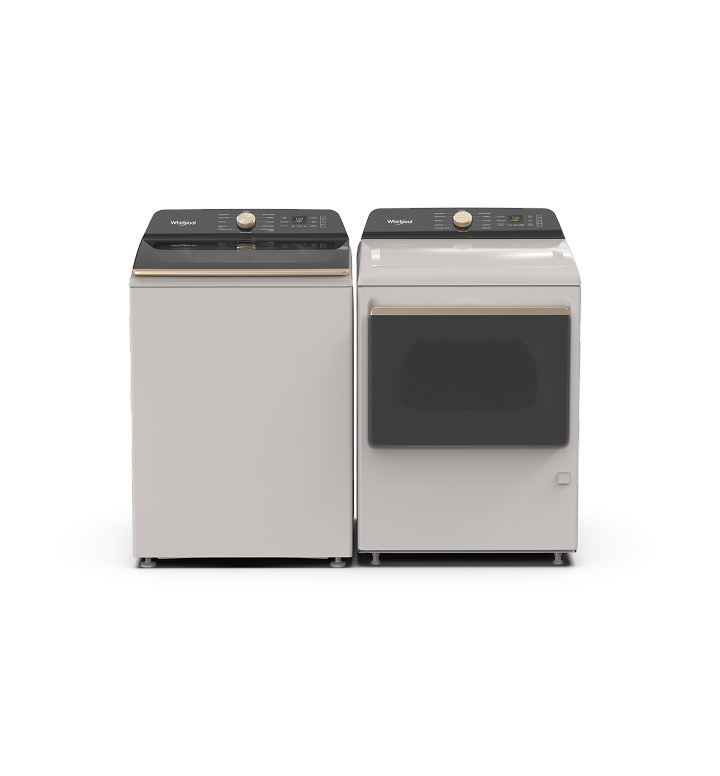
Whirlpool & Maytag
Designing the embedded interface for a first-to-market premium appliance.
Role: UX Designer
Year: 2025
Product Type: Embedded / HMI / Physical HMI
Context & Problem Framing
Market Position: Whirlpool operates in a highly competitive appliance market shaped by shifting consumer expectations and increasing innovation. This makes differentation harder than ever.
The Solution: To address this, Whirlpool introduced a dual-basket washing machine capable of running delicate and regular loads simultaneously - a fundamentally new interaction model in home laundry. Because it was brand new, the control panel needed to do more than just control the machine. It needed to educate, reassure, and reduce cognitive load for users who are accustomed to to a traditional washing experience.
The Challenge
Three things made this genuinely difficult:
Multi-brand complexity. The solution needed to scale across Whirlpool and Maytag without fragmenting the interaction model.
Late-stage technical surprises. Industrial Design and Mechanical Engineering assumptions hadn't been fully stress-tested, requiring UX to absorb friction and pain points mid-process.
Misaligned stakeholders. Marketing wanted visibility, while Engineering wanted simplicity. Both positions are valid, and both created pressure on the design.
These constraints shared a common thread: the complexity was systemic, not aesthetic. A well-styled interface would not make up for a poorly designed flow, or sequences the user couldn’t understand. The design challenge was fundmentally about logic and clarity.
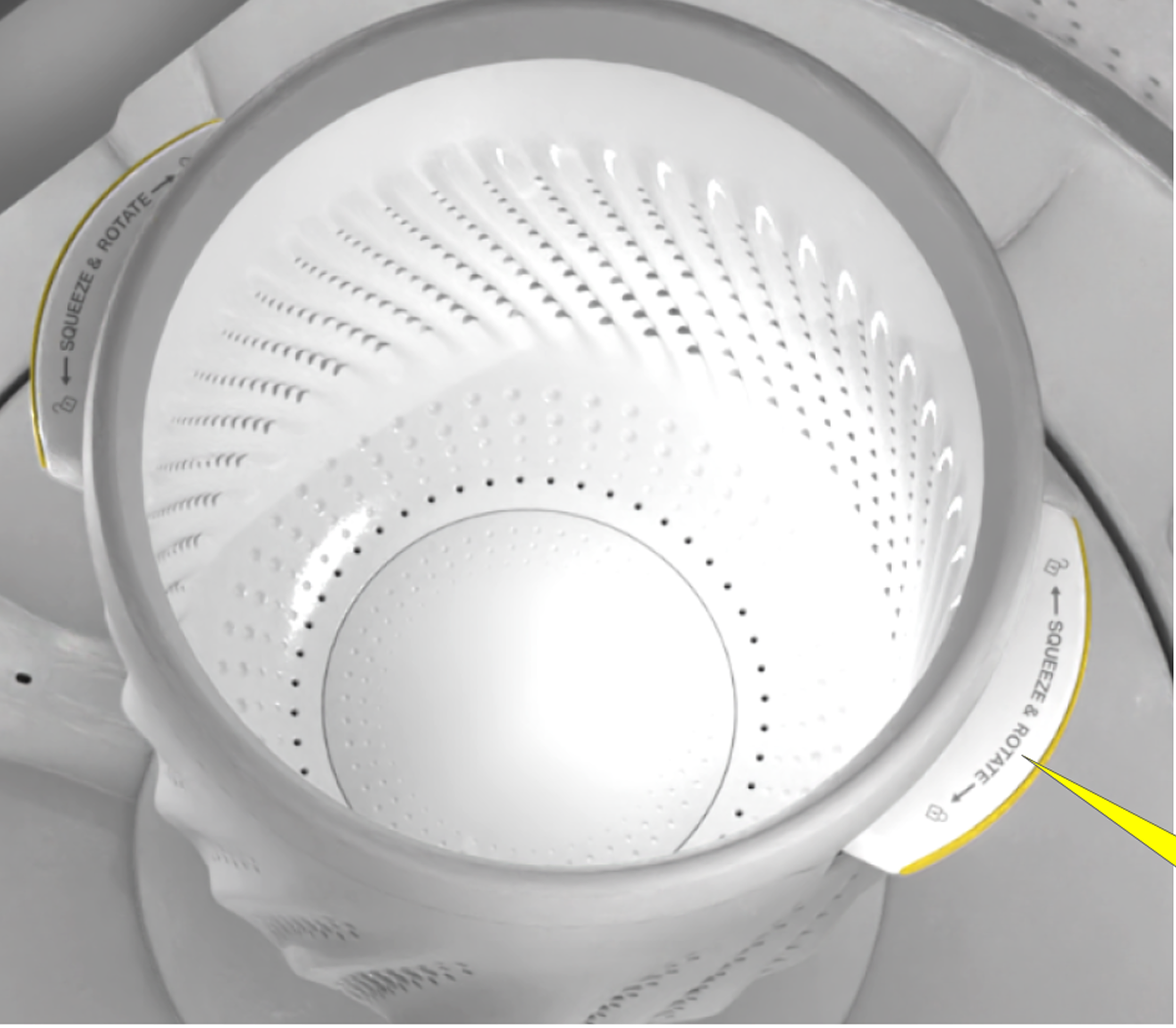
image 1: The image to the left portrays the delicate basket placed within the regular drum of the washing machine.
Discovery & Insights
With a clear understanding of the design constraints, we moved into exploration by stress-testing early assumptions against real user behavior.
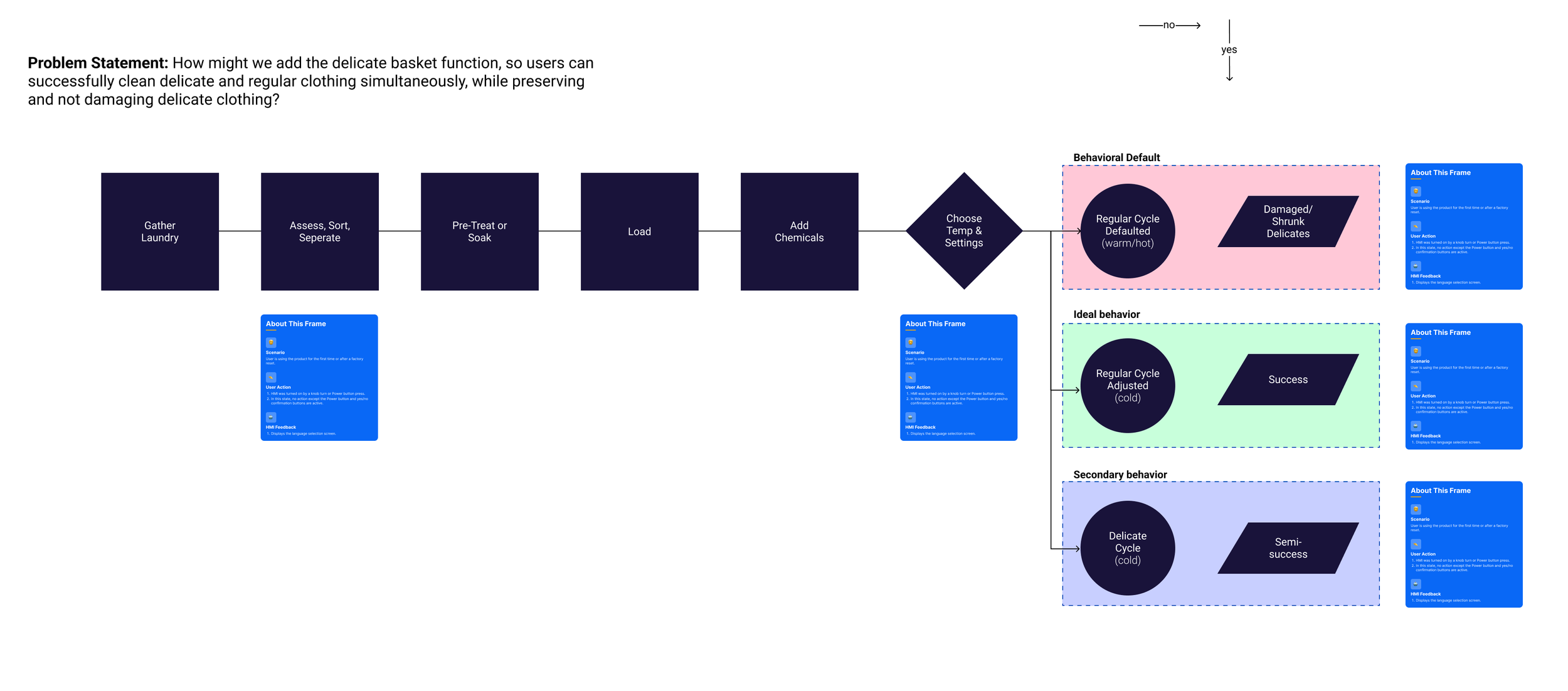
Early assumptions suggested that the dual-basket functionality could be introduced via a single new control on the HMI. However, when we mapped real user scenarios across the laundry lifecycle, from load planning to cycle completion, this approach quickly broke down.
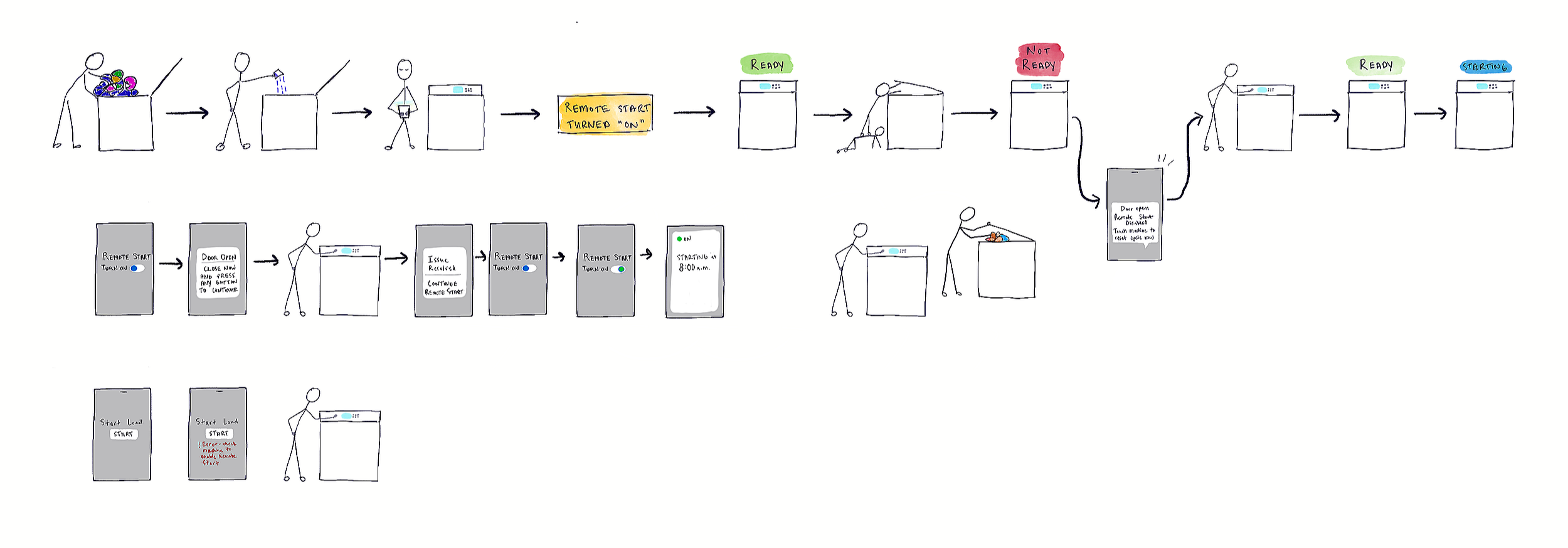
Through journey mapping, user flow exploration, internal and secondary research, and system modeling we uncovered several critical insights:
Uncovered Critical Insights:
Laundry is a habitual, low-attention activity. Users rely heavily on muscle memory and pattern recognition
Choice at the wrong moment increases hesitation and error. The dual-basket feature needs to feel automatic.
The machine can’t “know” what the user wants. Transitions between setup, active wash, and completion are where confusion peaks and where the HMI needs to do the most work for the user.
The User Need
Users don’t need more control. They need clear feedback at the right time, with minimal cognitive requirements.
Design Strategy
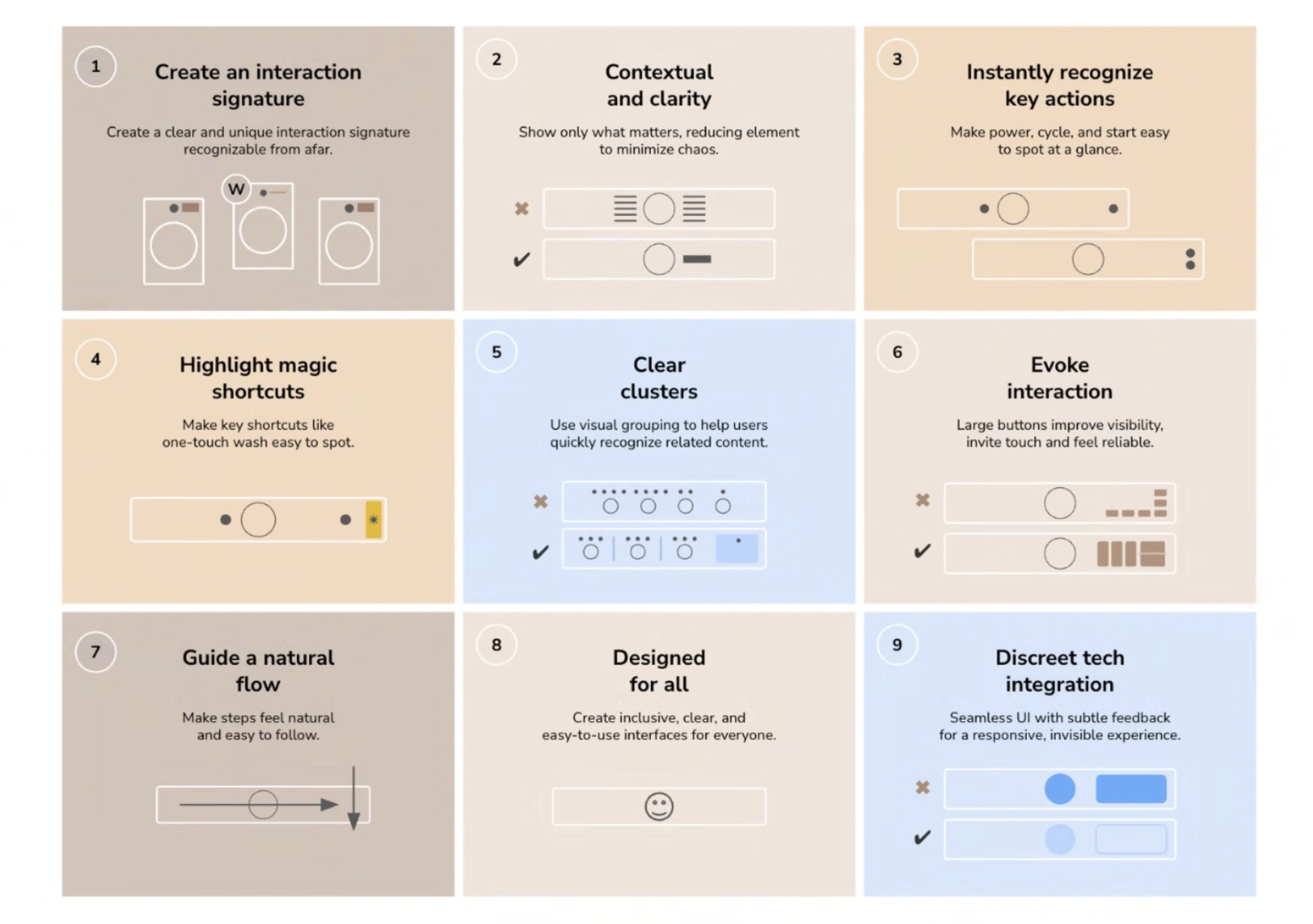
Those insights directly shaped how we approached the solution. If laundry is low-attention, the feature intro had to be contextual. If transitions are where confusion peaks, they needed to be automated or clearly signaled. If the mental model was sacred, the interaction patterns had to protect that.
Our strategy focused on three priorities:
Contextual guidance over feature announcement. Introduce the dual-basket capability when it's relevant to the user, not all at once.
Automate or clearly signal key transitions to reduce moments where users have to interpret what the machine is doing.
Build scalable interaction patterns that could extend to future products - including a pet hair attachment already in development.
These priorities had to work within constraints that were fixed from day one:
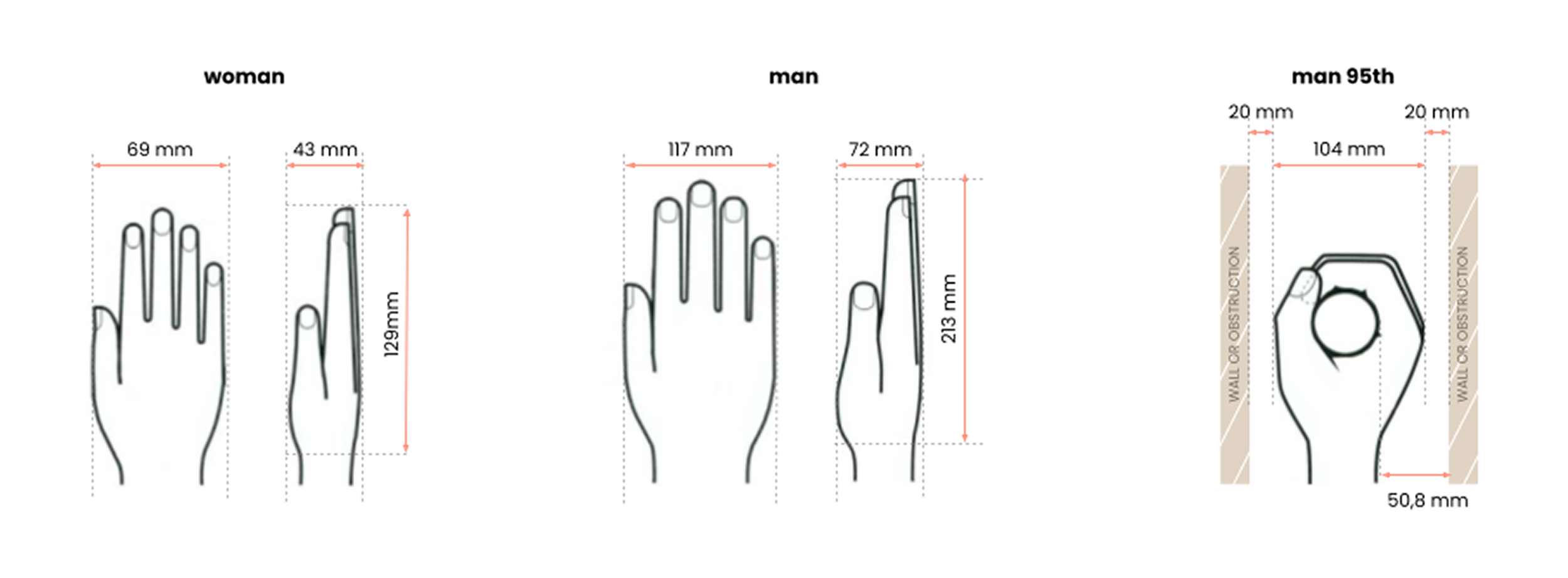
Work within the existing hardware panel
Add the new function without adding new physical controls
Don’t dissrupt a mental model users have held for decades.
The design had to fit the machine, not the other way around.
Execution
With strategy defined and constraints established, the work shifted to prioritizing detailed flows, prioritzing flow integrity and pressure testing it against reality.
Early concepts explored multiple mental models early on for dual-basket washers: system-led automation, parallel independent flows, and a primary/secondary basket relationship.
Iterative refinement narrowed the solution to a model that balanced existing hardware constraints with user agency
Usability studies on select flows validated decisions and ensured readiness before handoff.
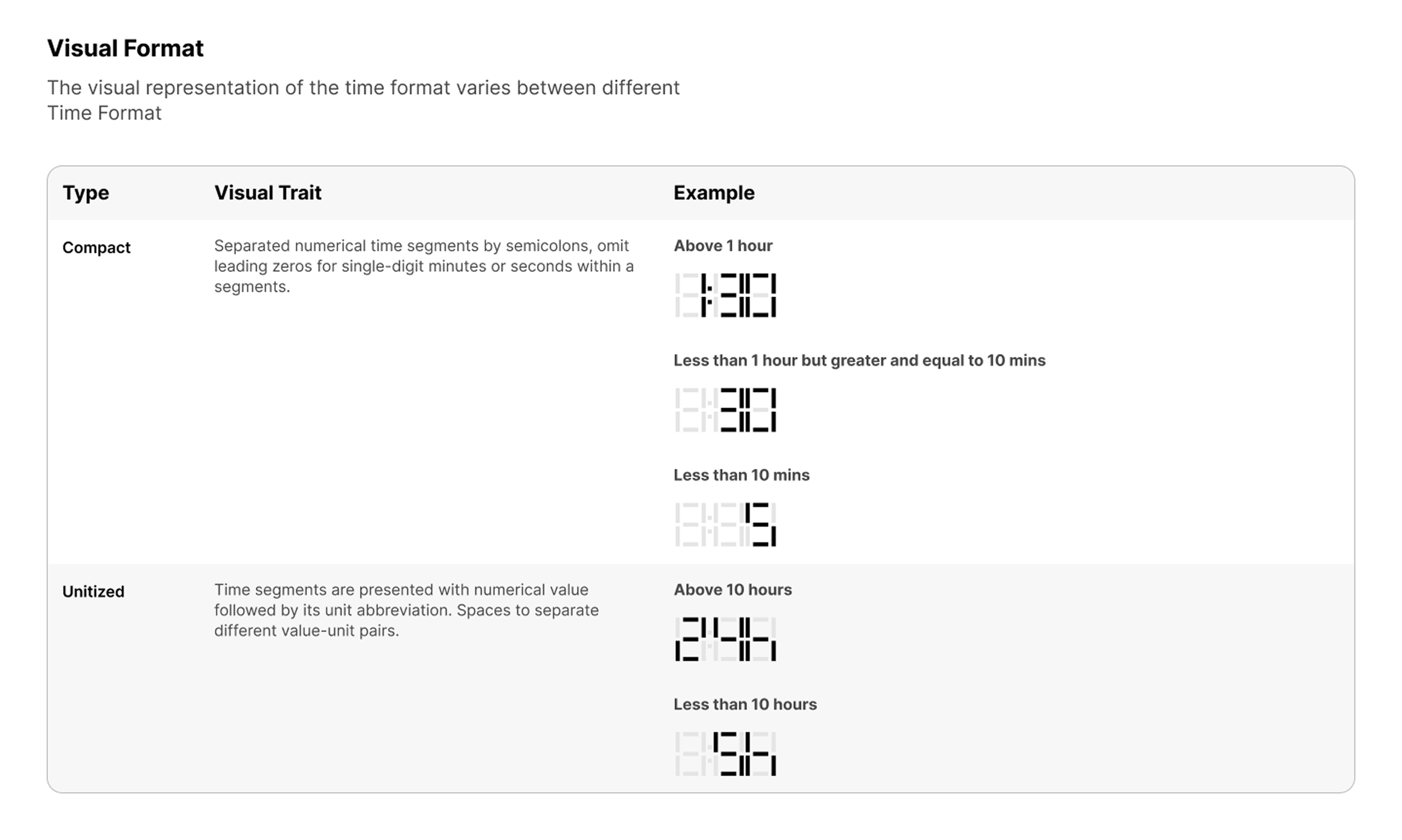
Detailed flows and specs defined edge cases, validation rules, and feedback states
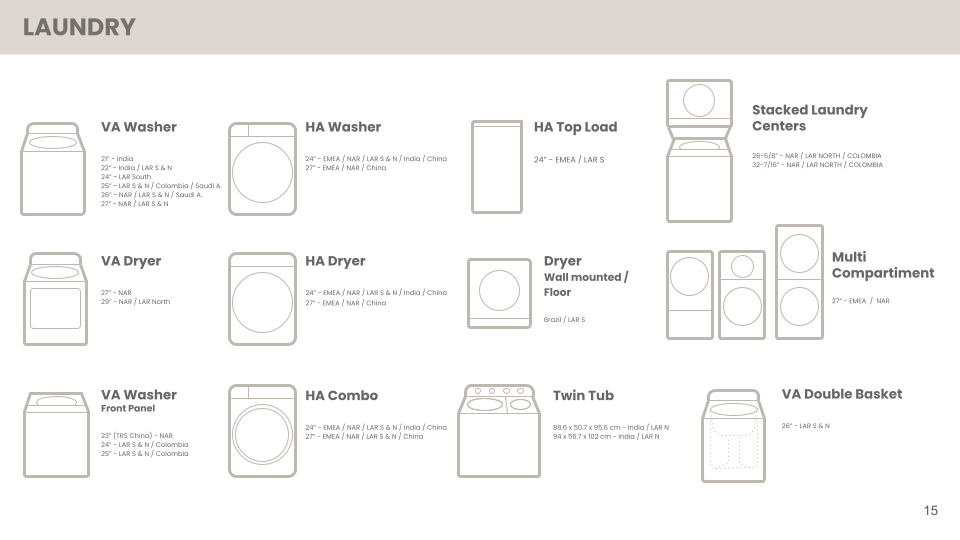
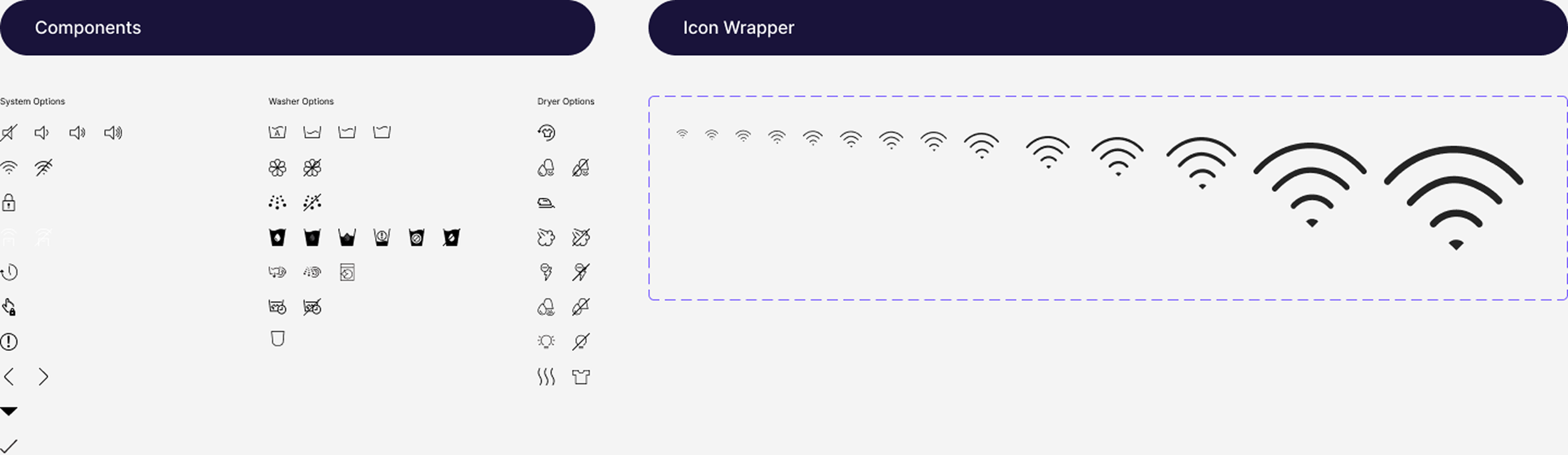
Component definitions ensured consistency across washer and dryer HMIs while allowing Whirlpool and Maytag to differentiate at the brand level.
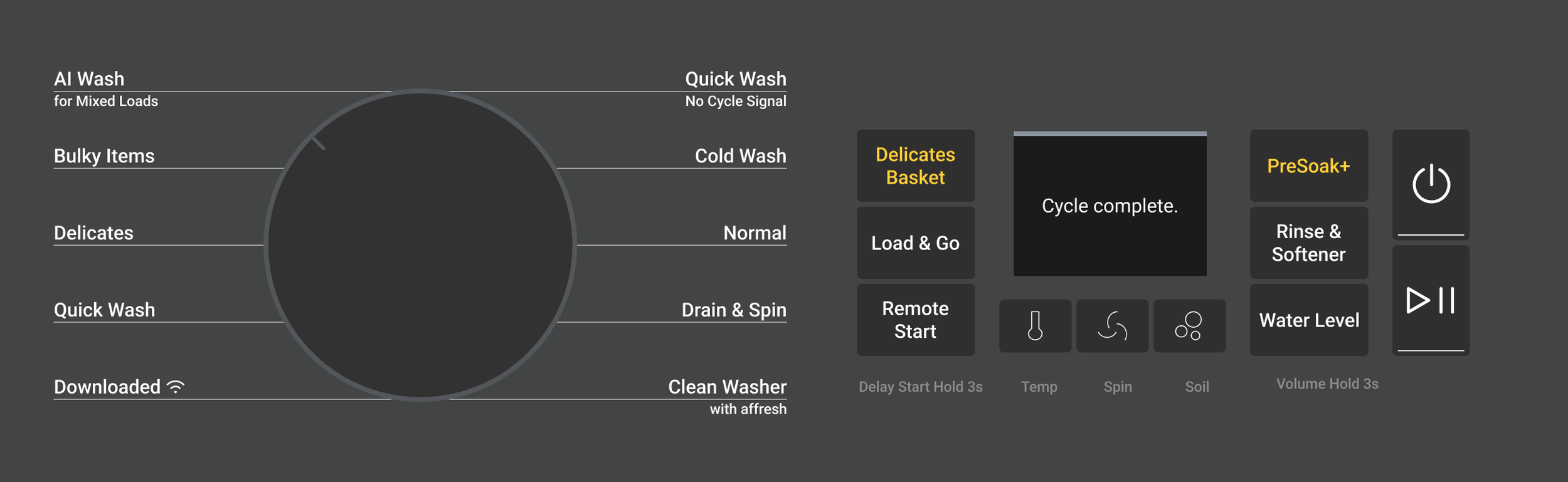
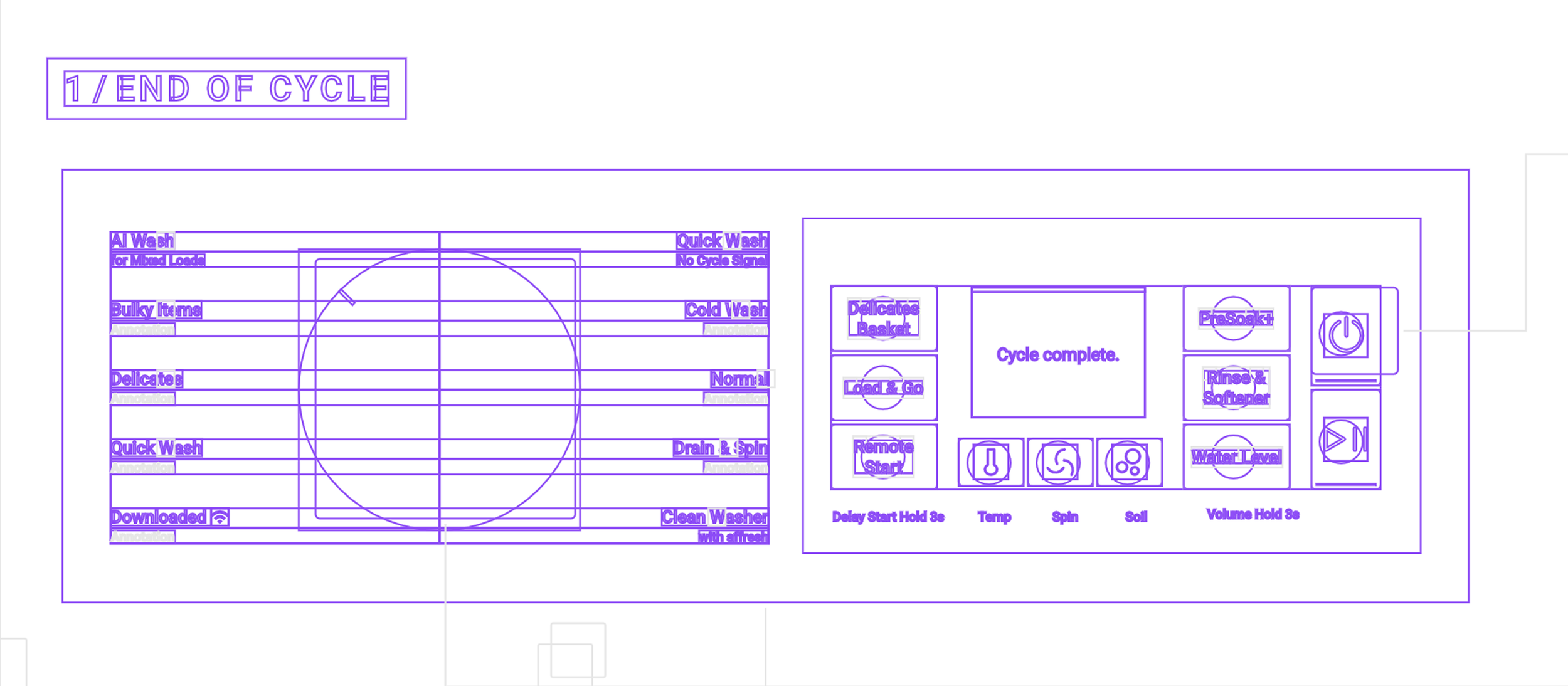
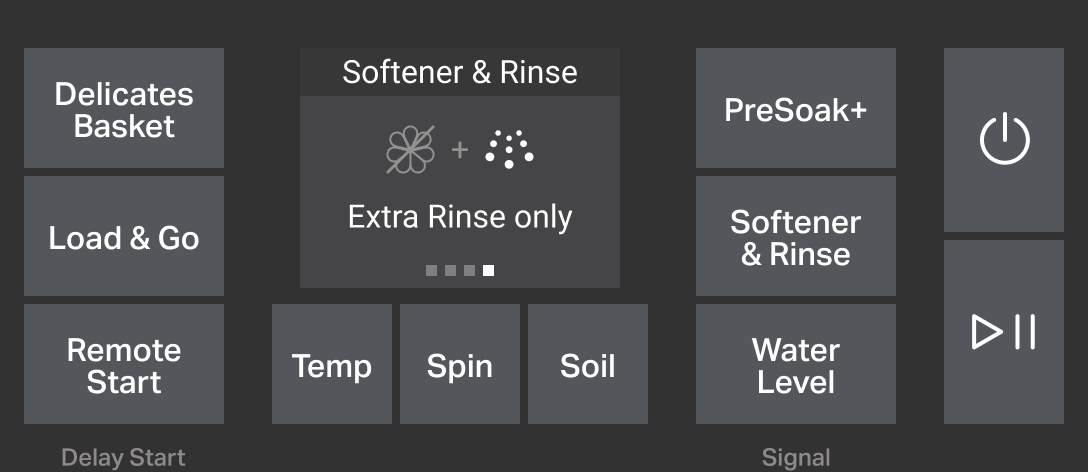
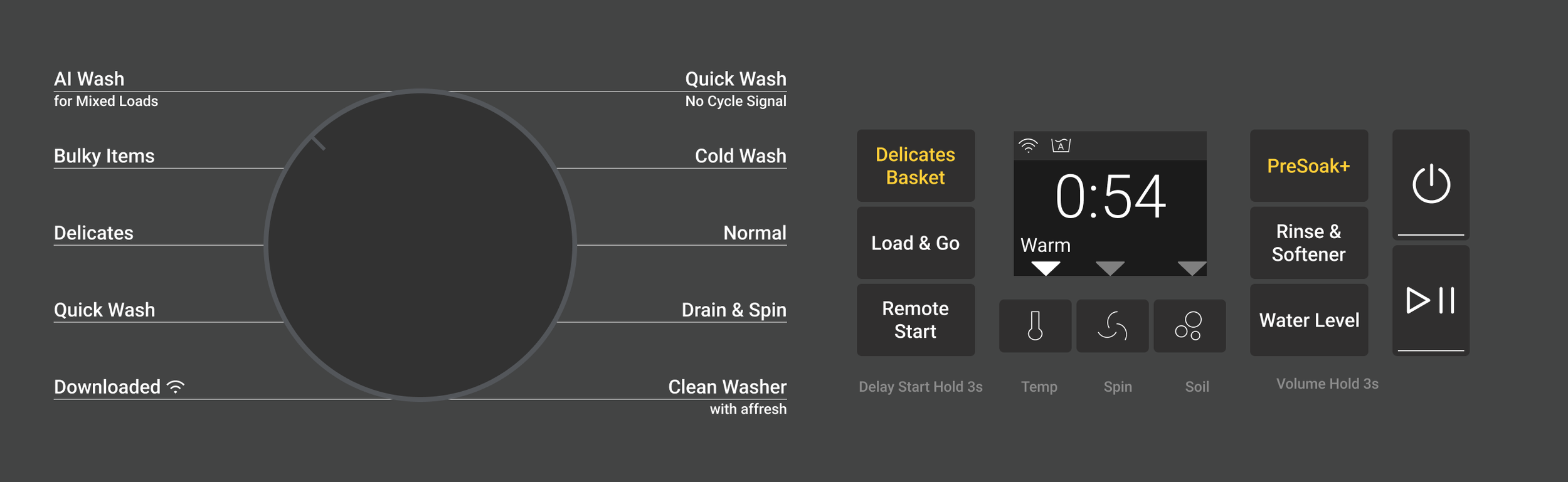
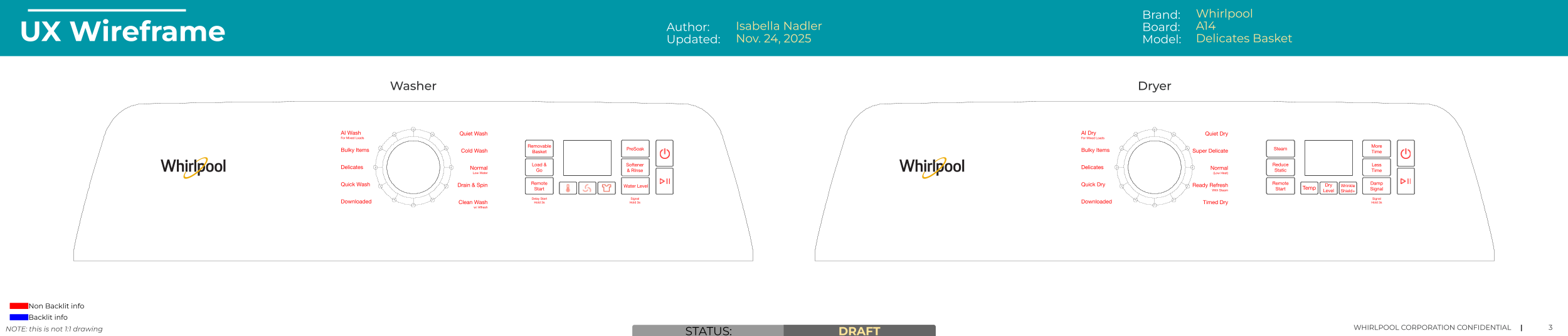
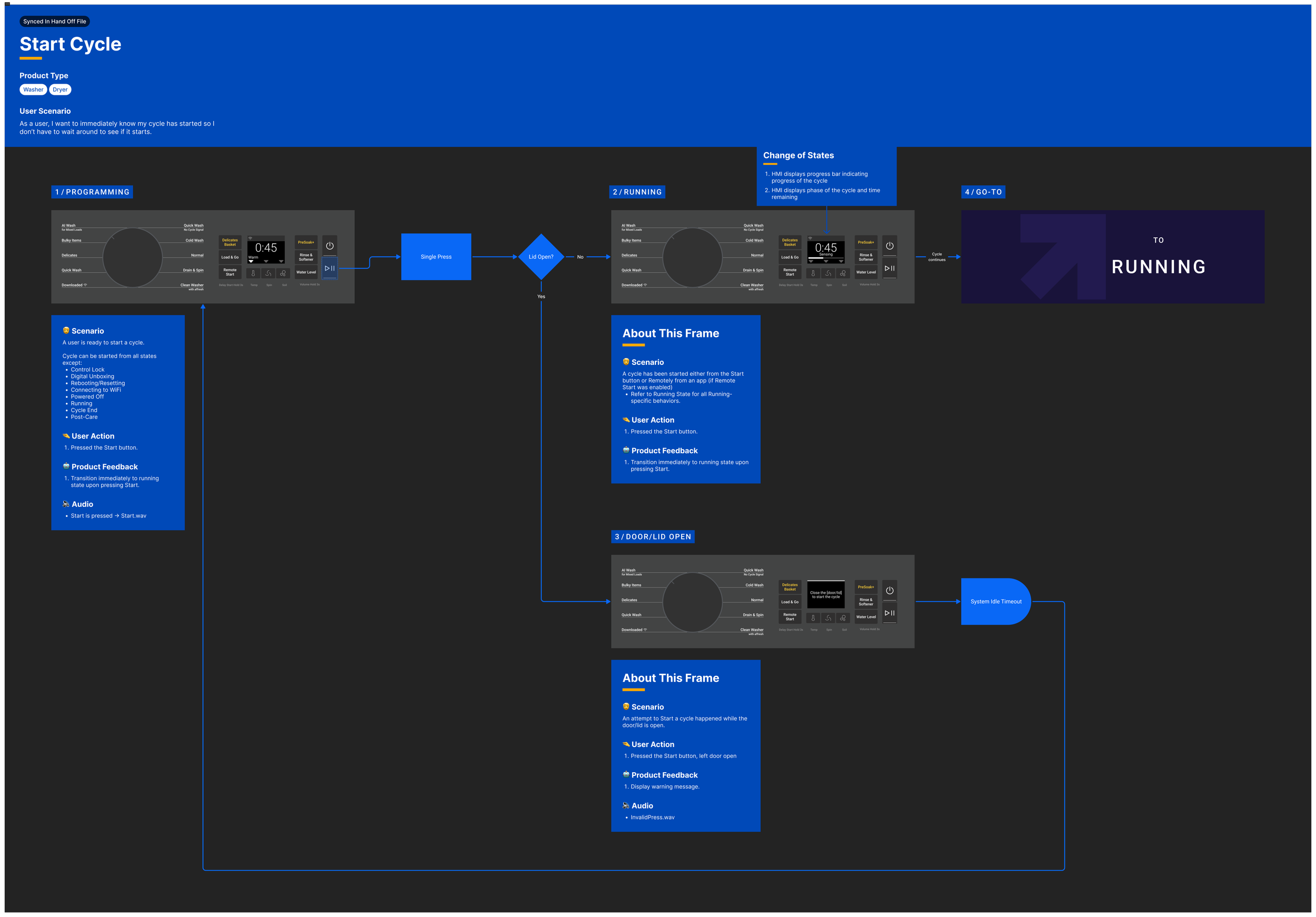
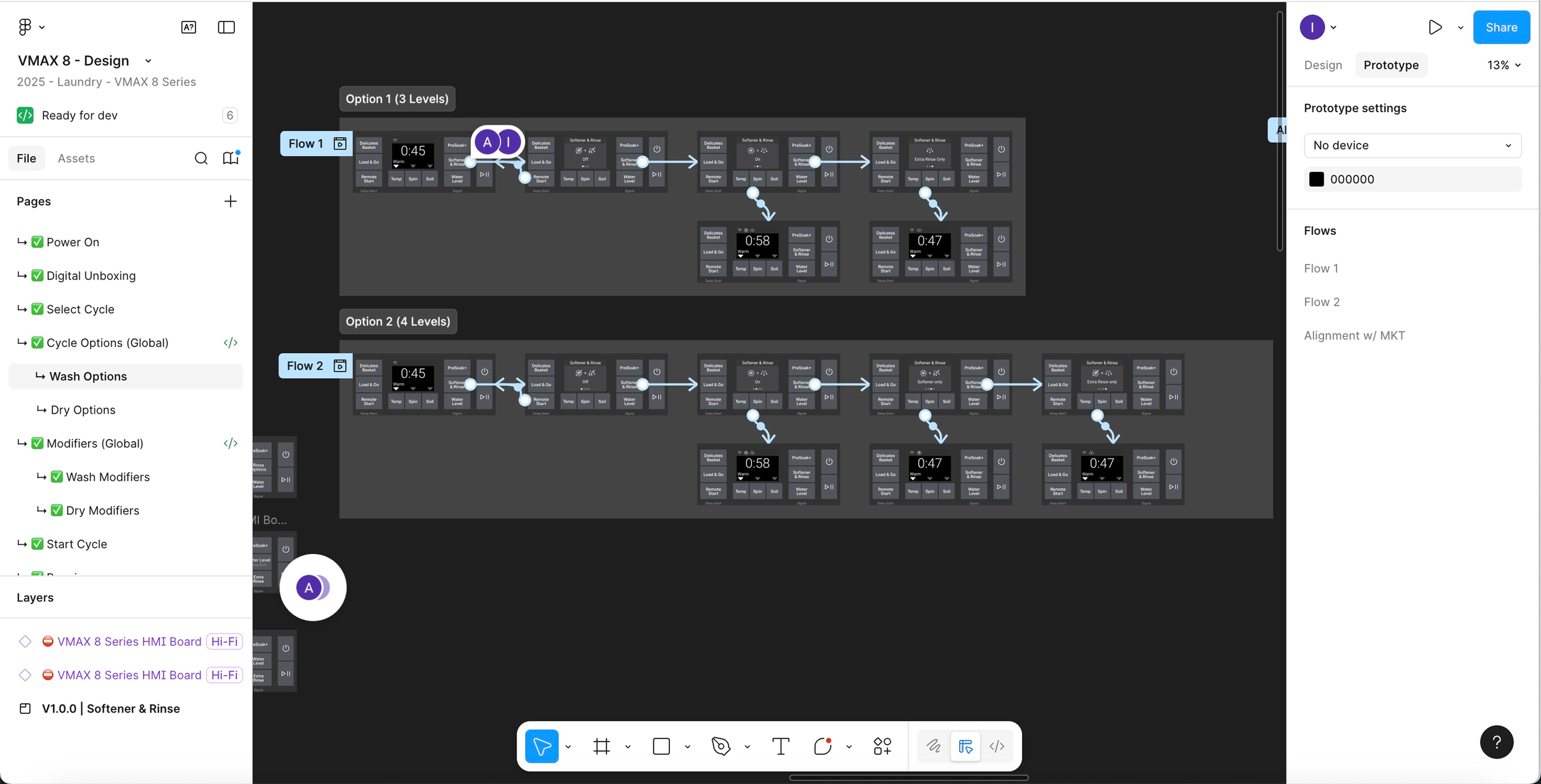
Detailed, annotated user flows provide developers with all the information needed to implement the design, including audio, button-hold time, motion graphics, timeouts, etc.
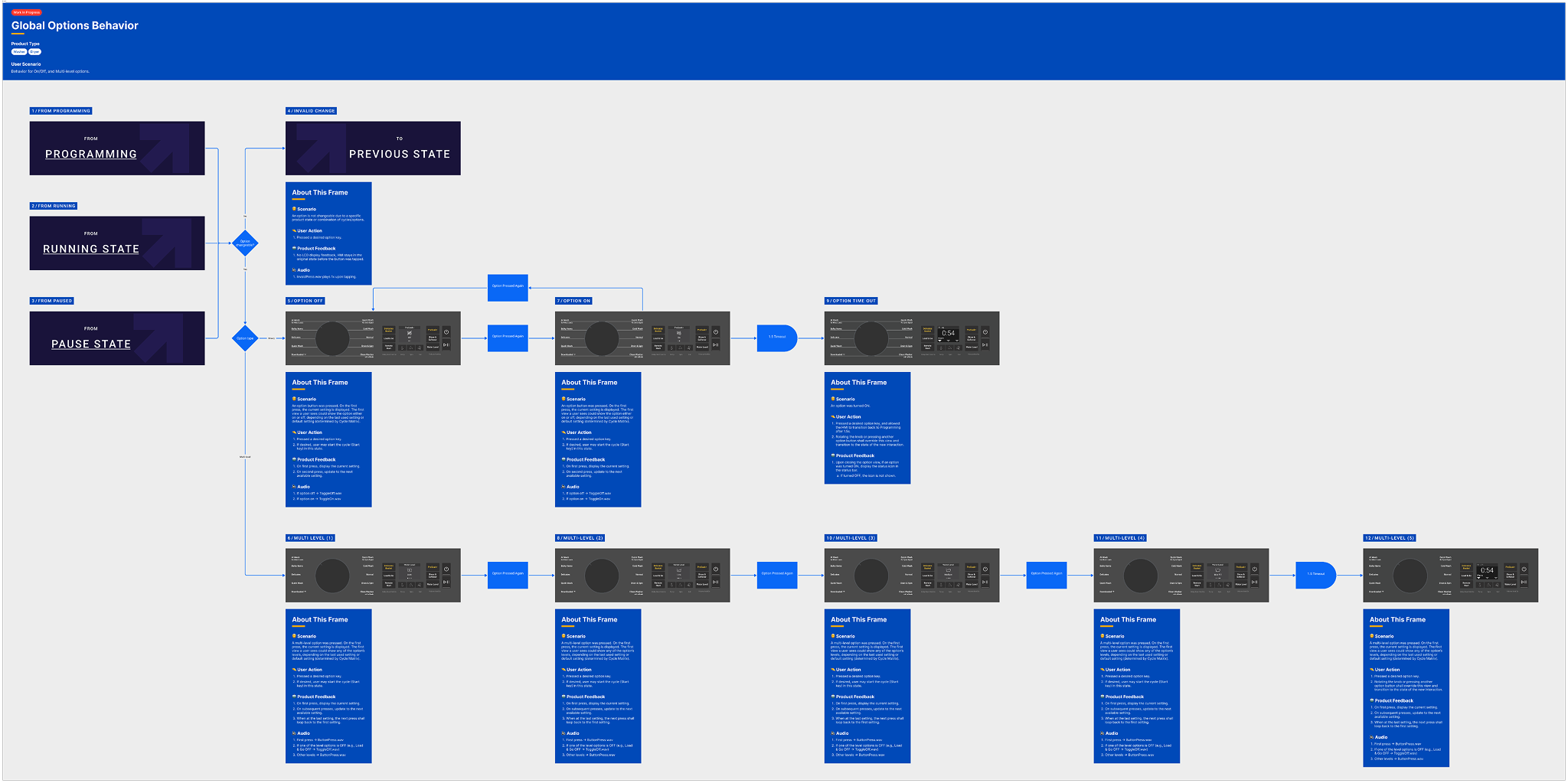
Being able to see the relationship between screens is critical for implementing an accurate UX.
Handoff & What’s Next
Deliverables were handed off through annotated Figma files, with each function mapped to flows and interactive prototypes. Work was tracked and scoped through Jira, ensuring engineering had clear, ticket-level visibility into requirements.
The product is scheduled for release in Summer 2026 as part of Whirlpool's biannual rollout cycle.
The interaction patterns established here are already being considered as the foundation for future HMI attachments — including a pet-hair detection feature currently in development.