Home Healthcare, Reimagined
Connecting patients, families, and caregivers through trusted matching and care coordination.
Role: Founding UX Designer & UX Strategist
Years: 2020-2025
Platform: iOS & Android
Summary
Demand for home healthcare is growing fast, but finding trusted care is fragmented and slow. As founding designer over a 5-year engagement, I led research, product strategy, and design for a marketplace that matches patients with caregivers and coordinates their care, taking it from concept to a 200-person pilot and helping raise $6M.
The Problem
Families wait days or weeks for care. Caregivers face rigid schedules, agency fees, and limited earnings. And scheduling, payments, records, and care plans live in disconnected tools.
What We Learned
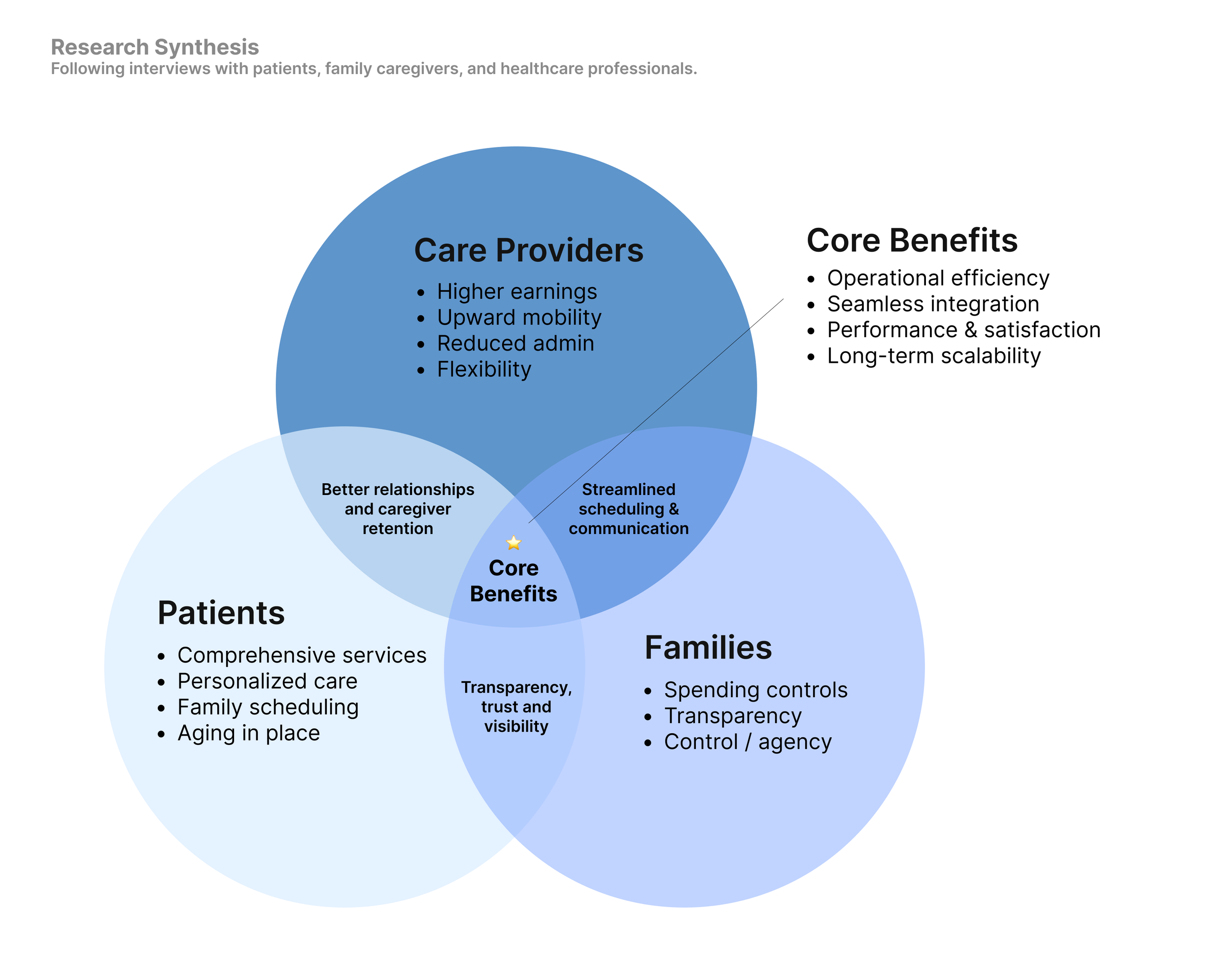
Across 30+ interviews with patients, family caregivers, and healthcare workers, three insights shaped the product:
Trust comes before convenience. Families needed confidence that a caregiver understood their loved one’s needs, language, culture, and personality.
Caregivers want autonomy. Nurses and aides wanted to control their schedules, choose their clients, and keep more of what they earn.
Coordination is as important as care. Scheduling, payments, and communication broke down across too many tools.
Defining the MVP
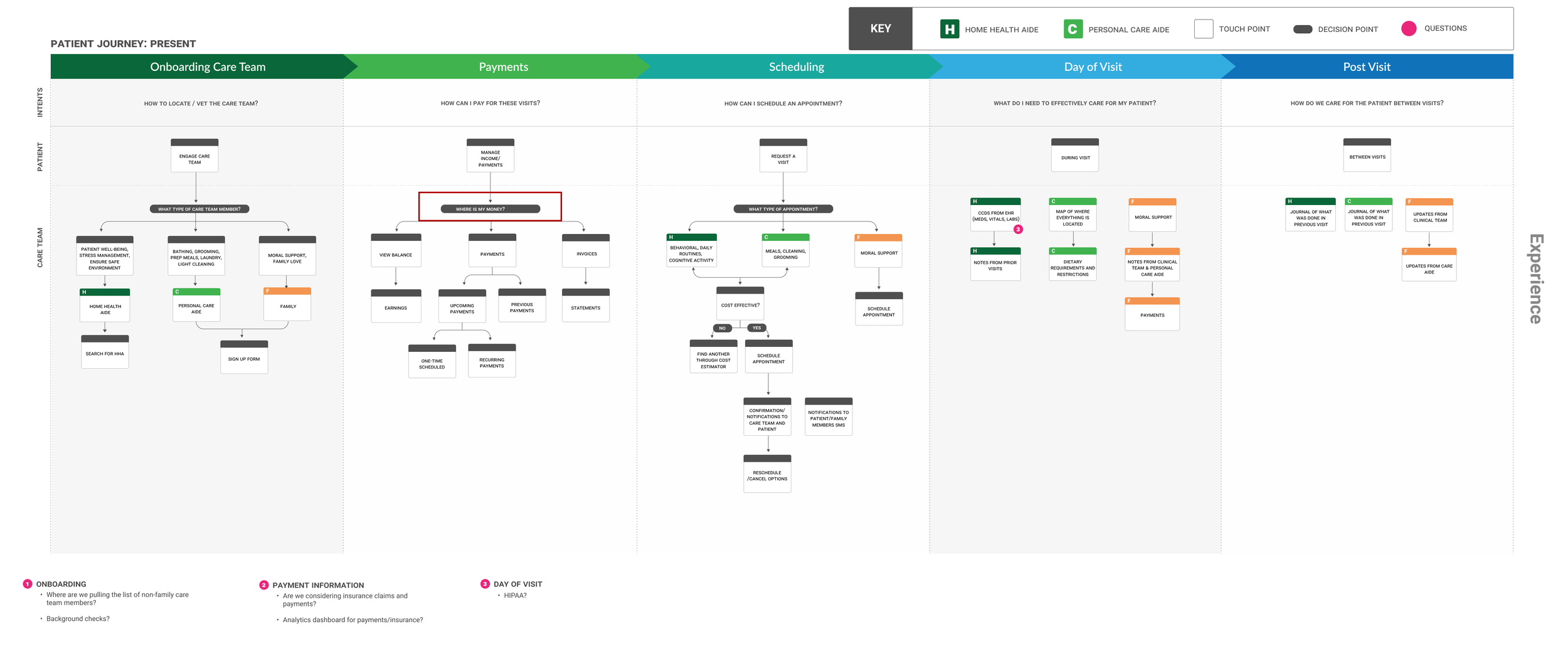
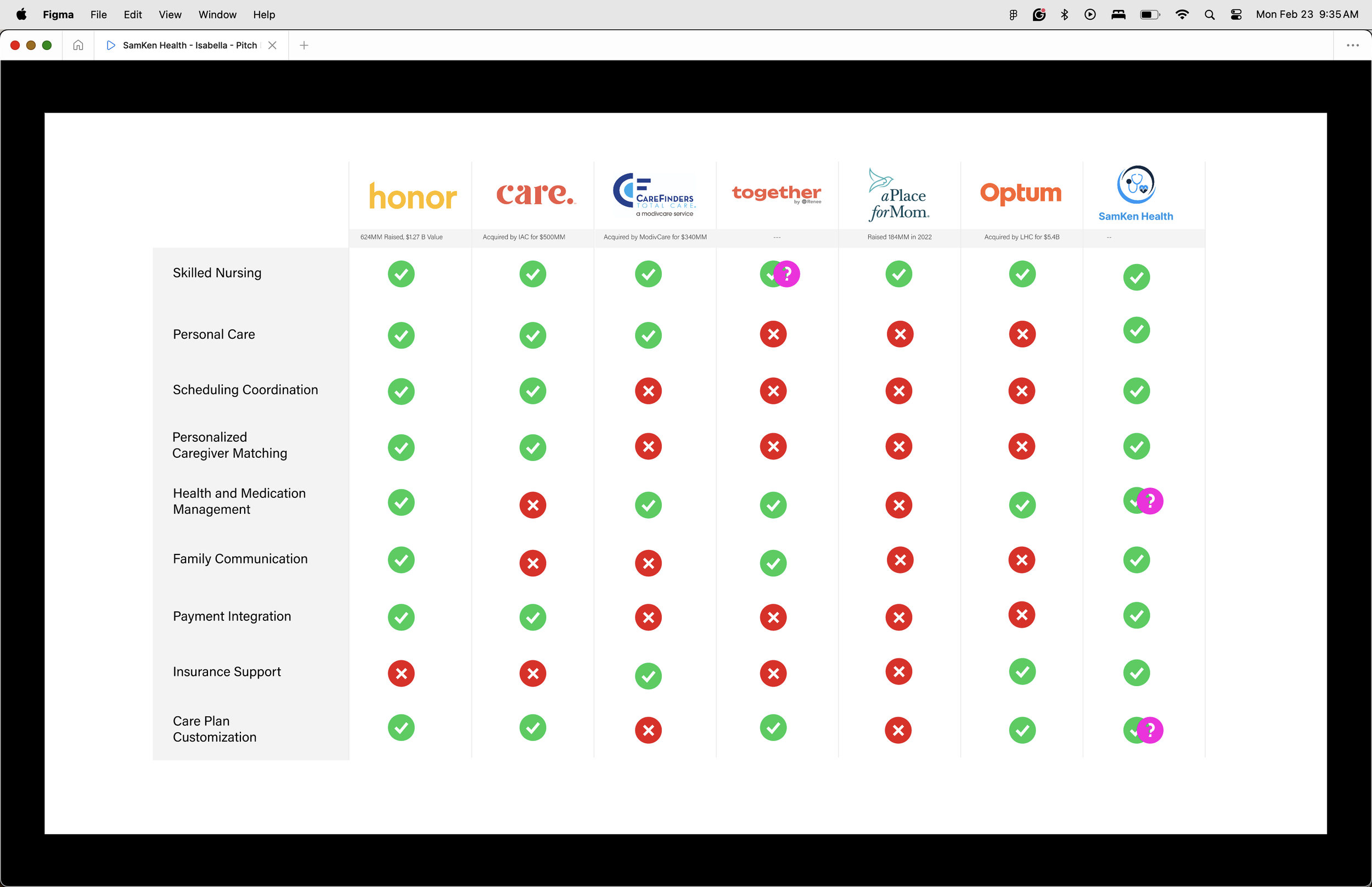
Three user groups had different goals but shared core needs: trust, transparency, and communication. Using service blueprints and prioritization workshops with the founders and engineering, I focused the MVP on five capabilities that supported the full care journey, from discovery through payment.
Matching on More Than Credentials
Problem: Traditional home care matches patients and caregivers on availability and credentials alone.
Insight: The relationships that worked depended on language, culture, communication style, gender preference, and personality.
Challenge: How might we create a matching experience that balances logistics and human compatibility?
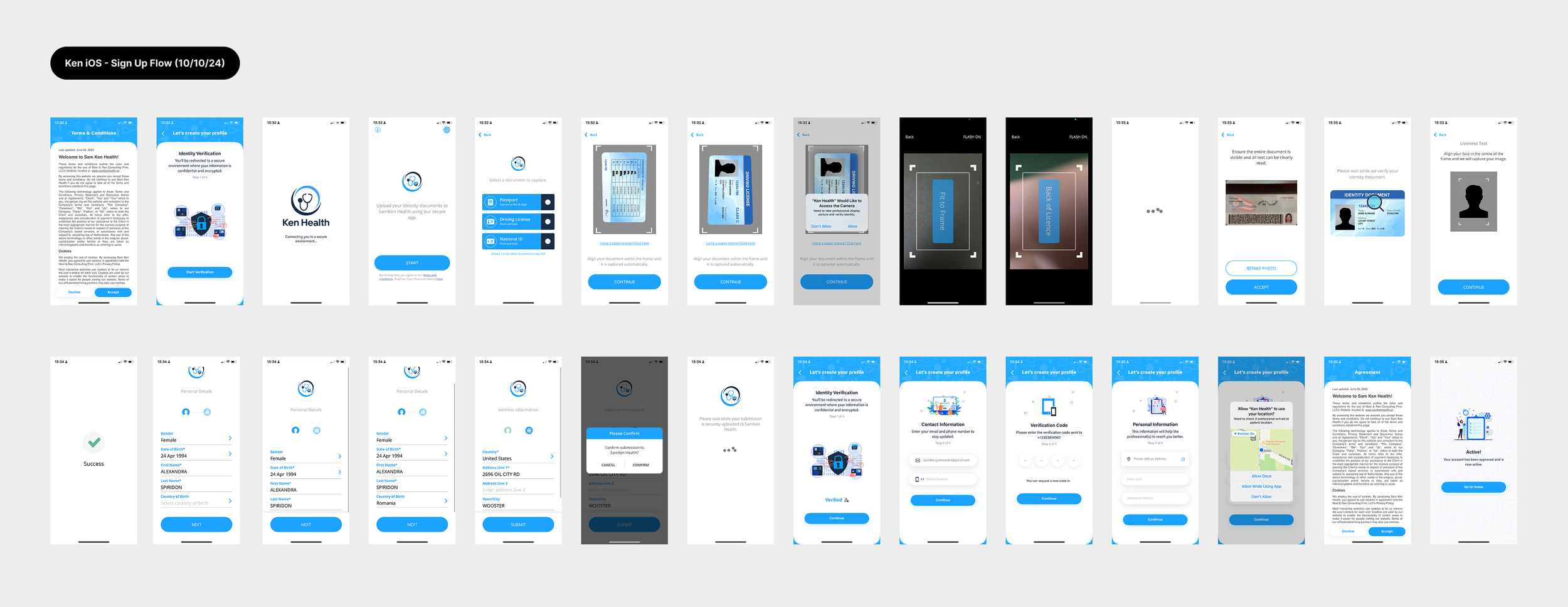
The matching flow lets families set those preferences up front, so they meet caregivers who fit their loved one rather than just whoever is available.
Onboarding Caregivers Into a Regulated Industry
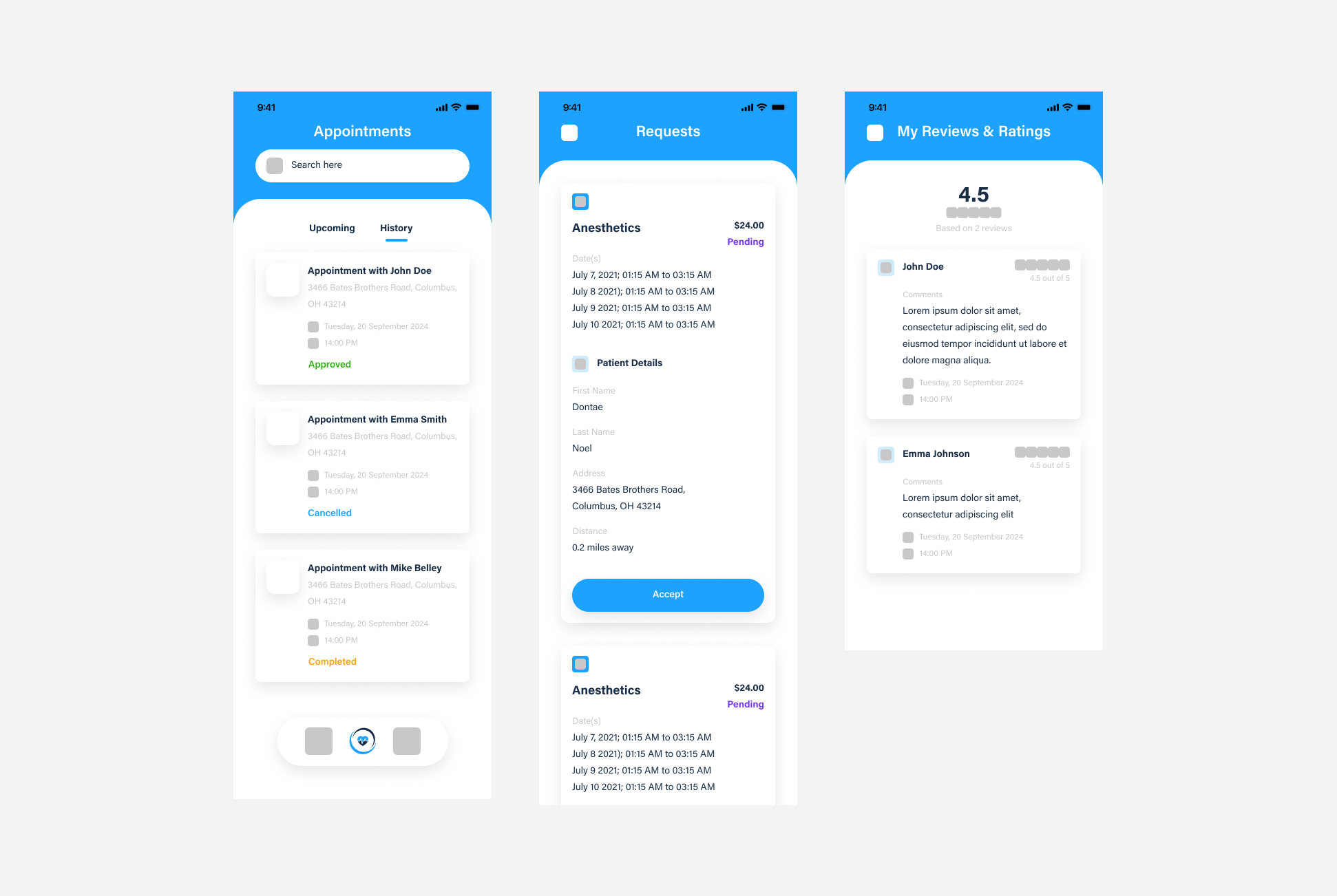
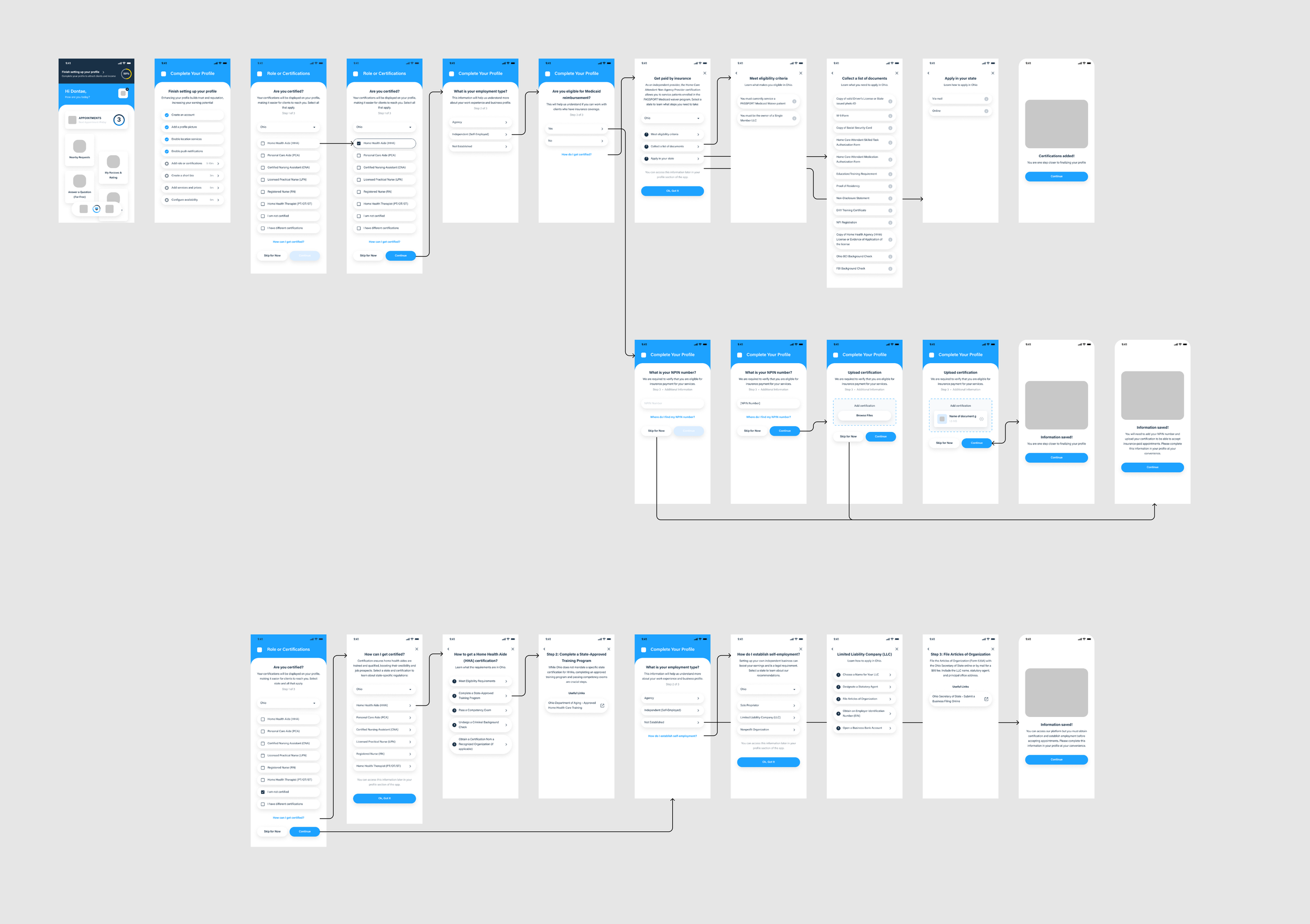
Becoming an independent caregiver means certifications, Medicaid eligibility, background checks, and business setup, with requirements that vary by state. I designed a guided onboarding that breaks this into clear steps, explains each requirement in plain language, and lets caregivers save their progress and come back later.
Coordinating Care
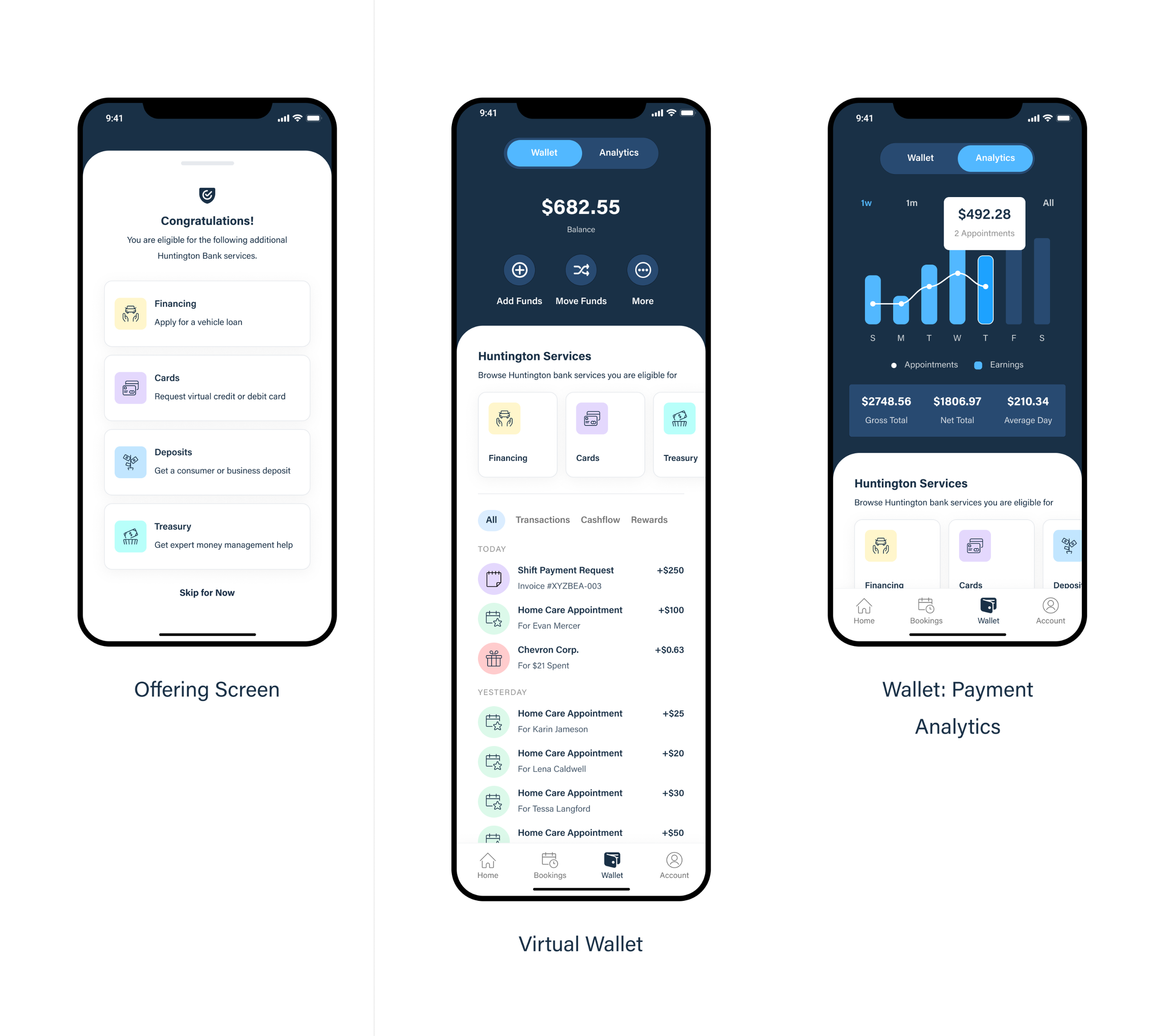
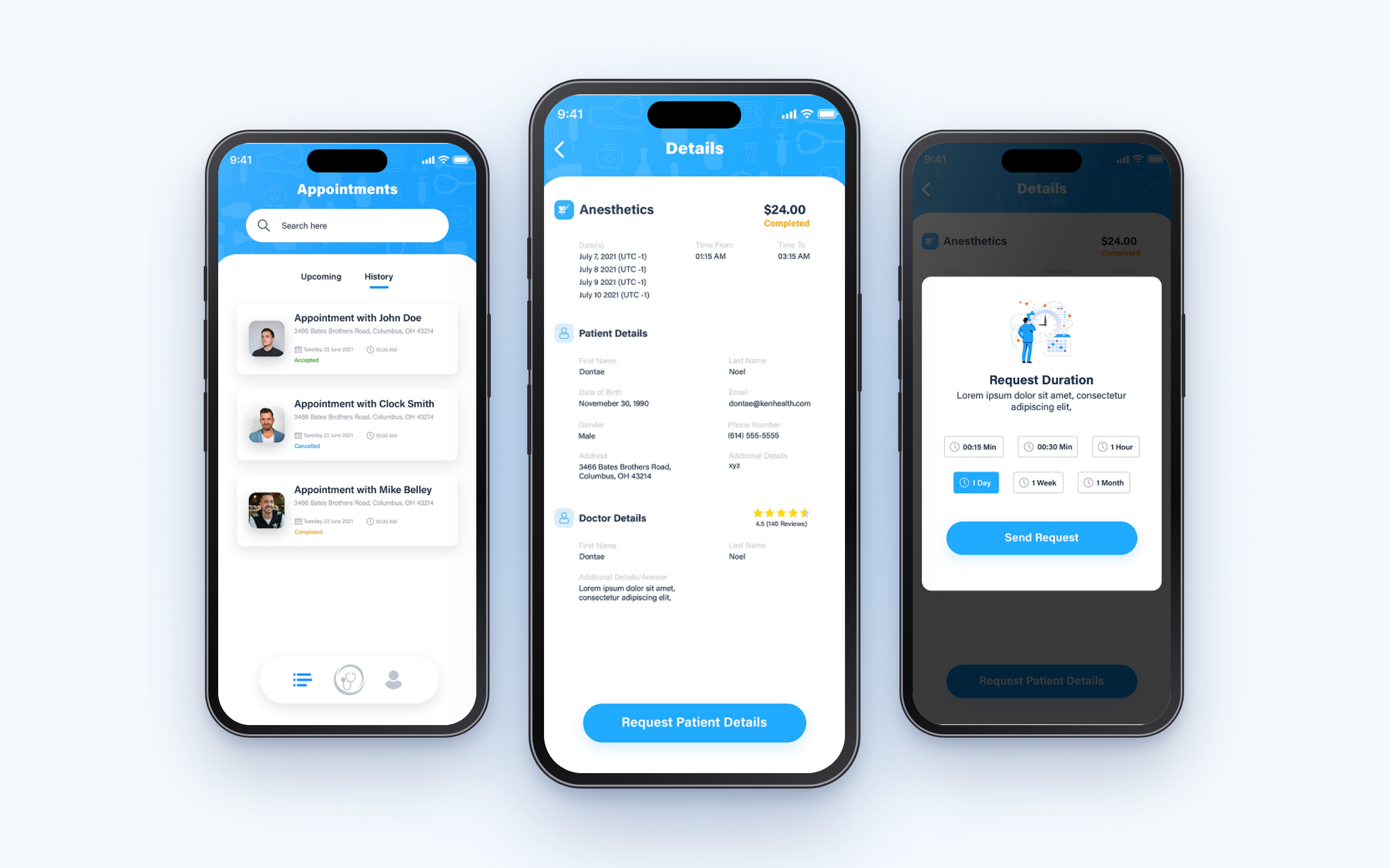
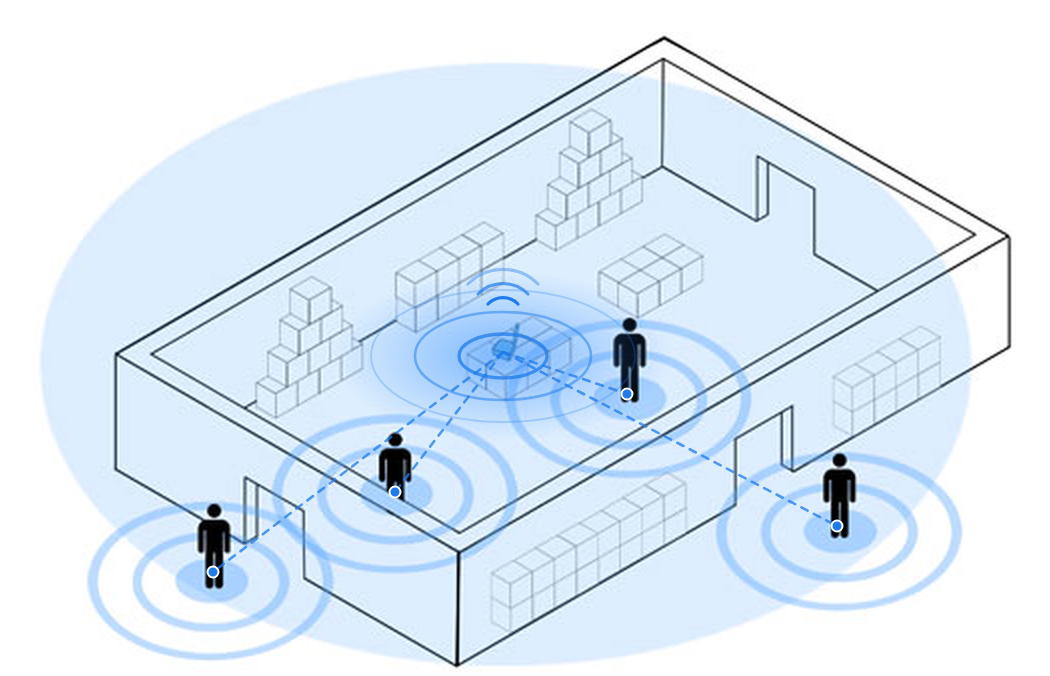
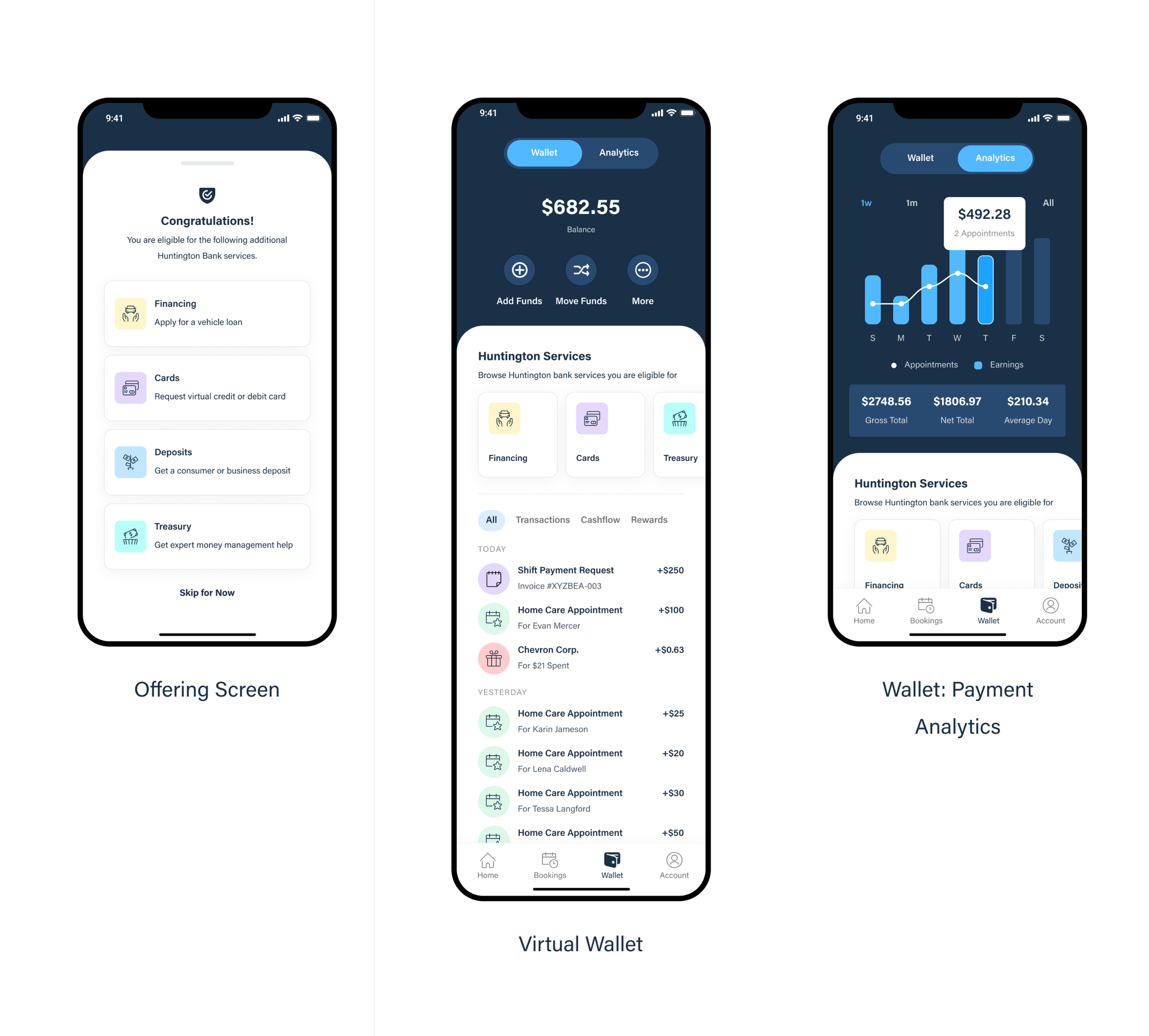
Once matched, patients, families, and caregivers manage appointments, requests, payments, and care details in one place, with clear statuses so everyone knows what’s confirmed and what comes next.
Outcomes
~80% less administrative effort across scheduling, assessment, care coordination, and payments
Improved booking conversion through A/B-tested browse-to-book flows
$6M raised, supported by investor-ready prototypes and product narratives
A 200-person pilot with patients, caregivers, and healthcare professionals
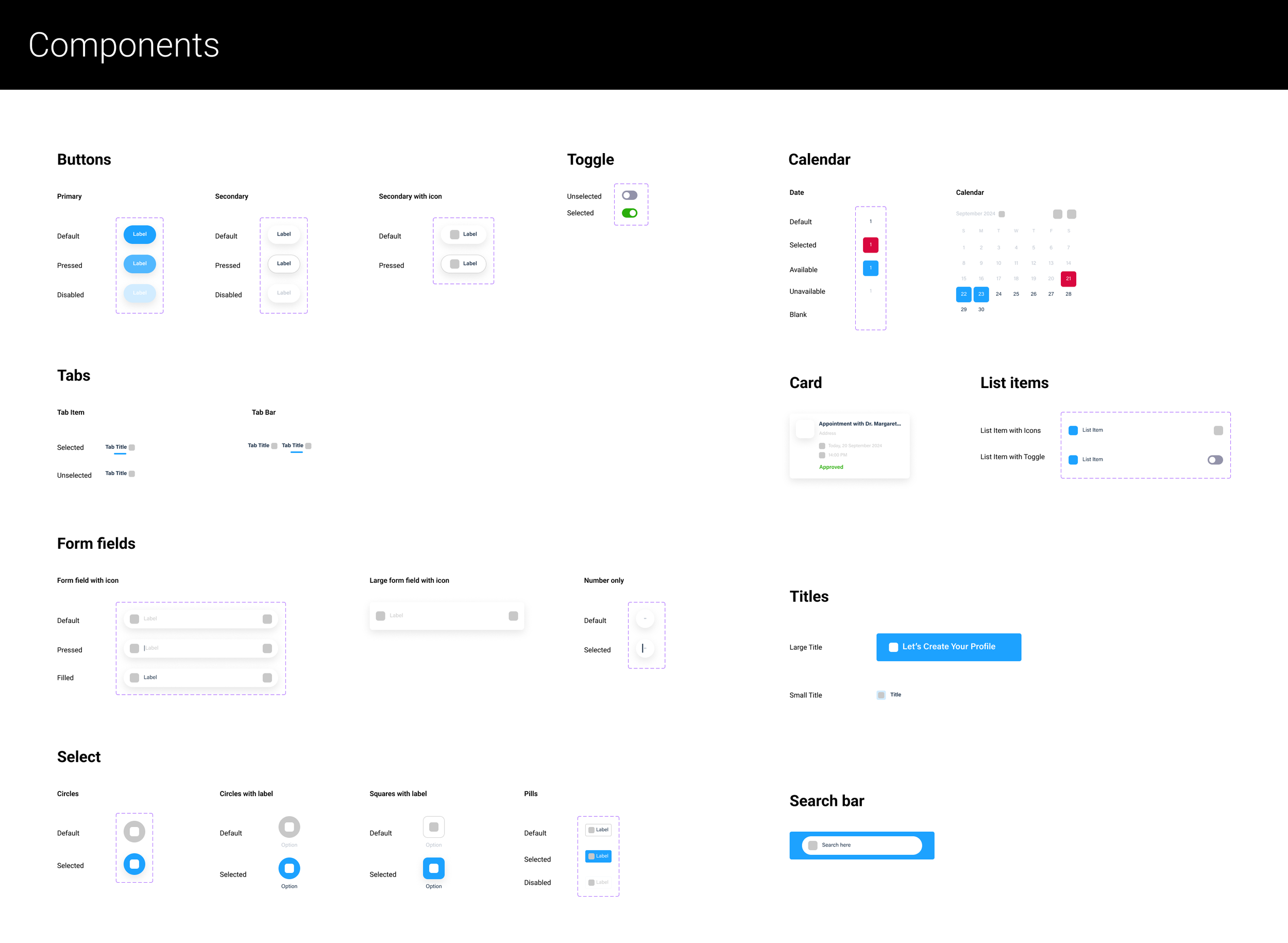
A scalable design system built on atomic design principles
What I learned
Building for three user groups taught me that the best features serve all of them at once. Trust and transparency weren’t separate features; they had to run through every flow. Watching the pilot validate our core assumptions was the most rewarding moment of the five years.