A Children's Experience @ Dayton Children's Hospital
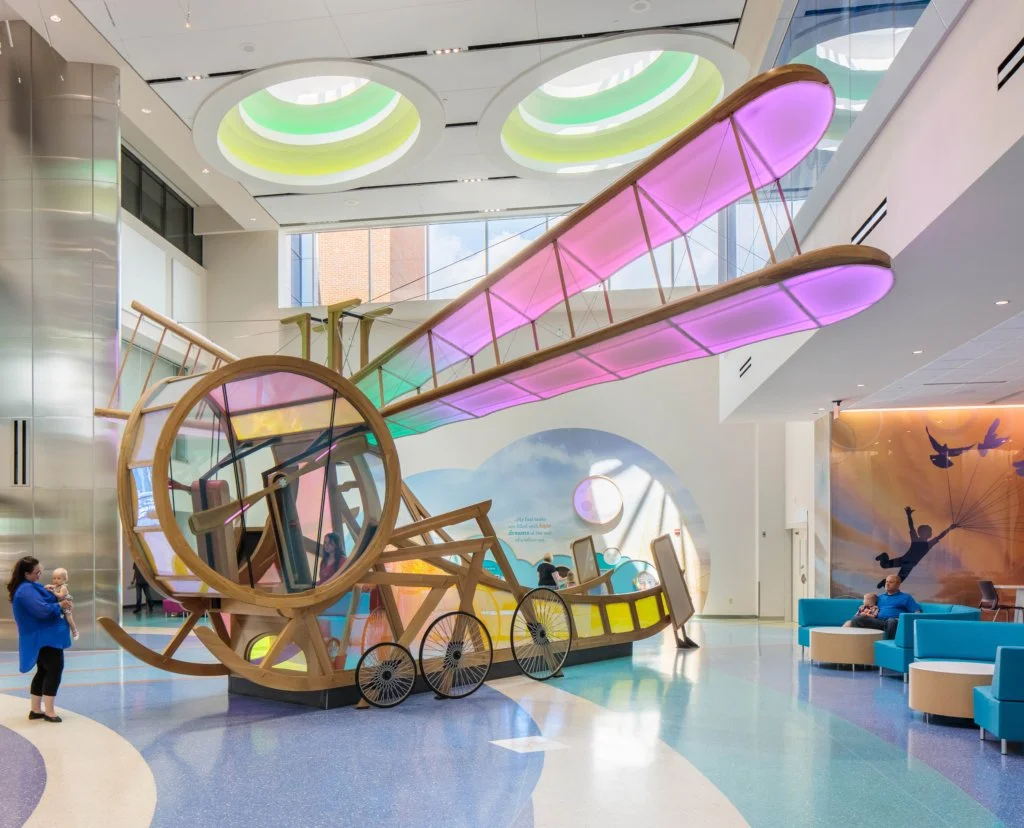
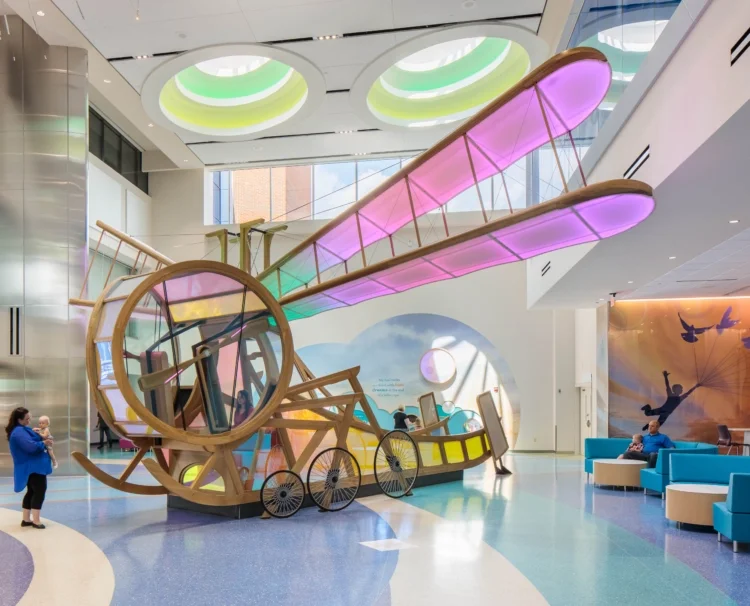
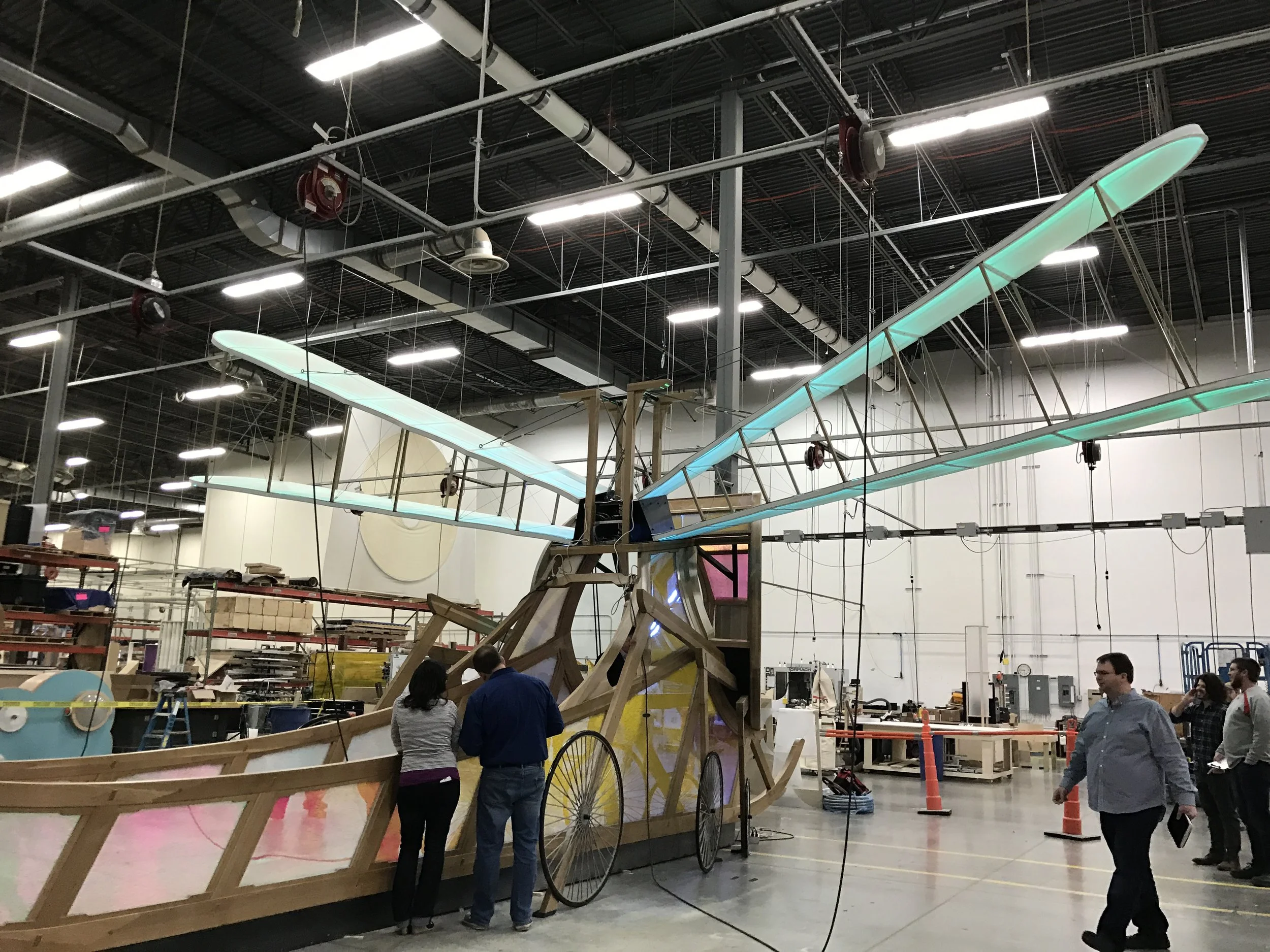
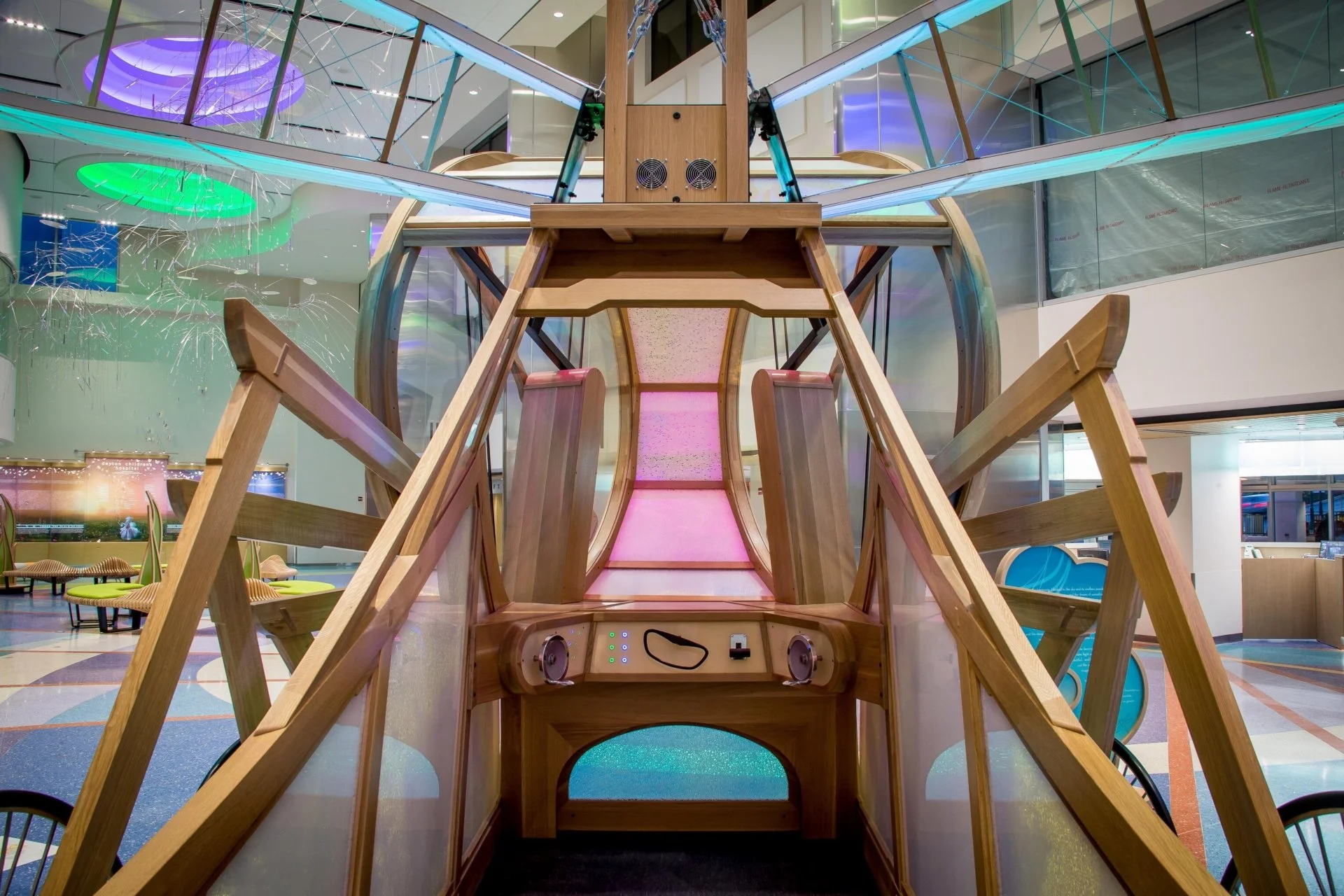
An interactive, custom-built creation at the Dayton Children’s Hospital, titled “The Dragonflyer”
Role: Production Associate
Years: 2017-2019
Product Type: Interactive spatial experience design
Background
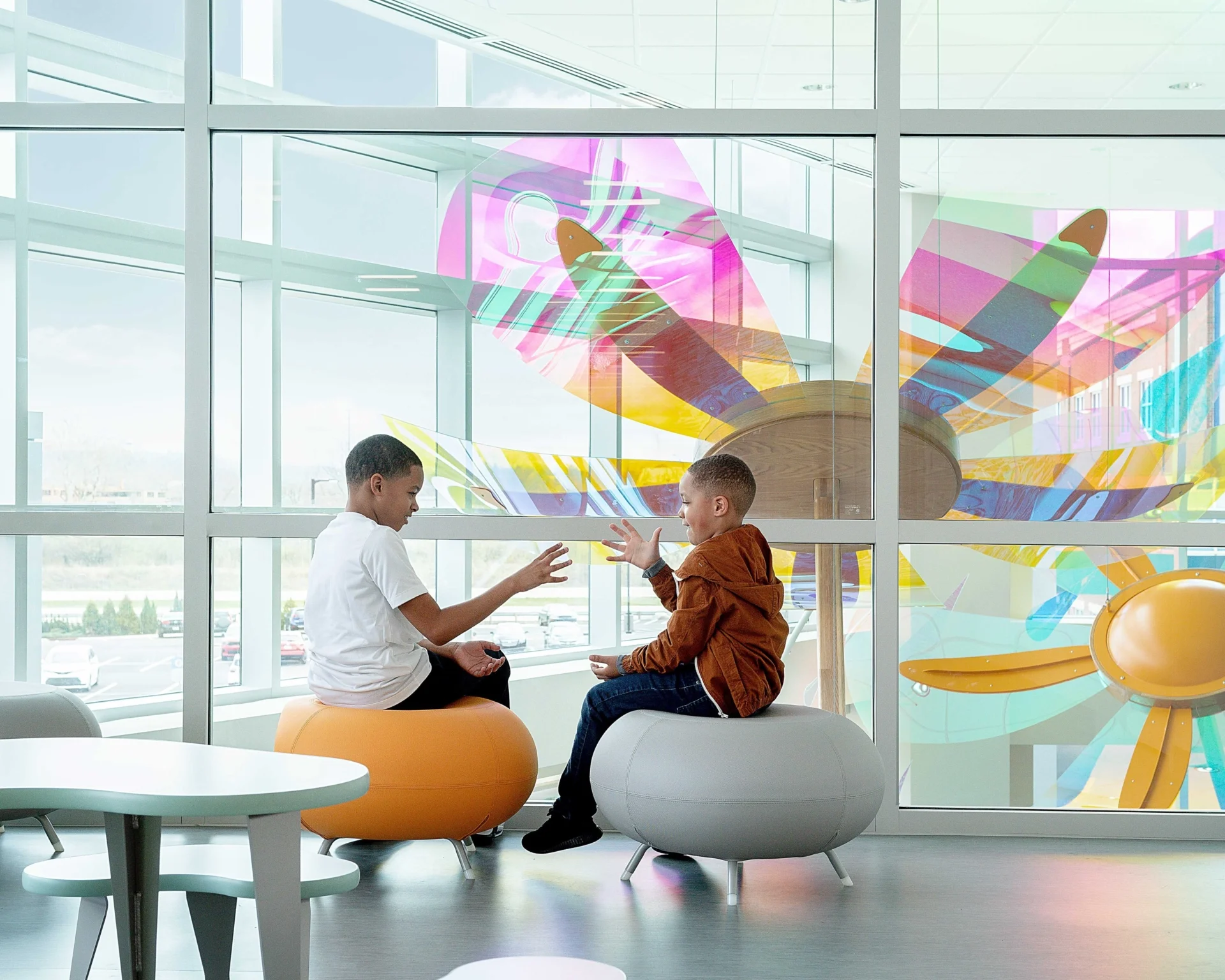
The Dragonflyer is an interactive installation created for Dayton Children's Hospital that combines Dayton's aviation heritage with the beauty of the natural world. Inspired by both dragonflies and the Wright Brothers' early aircraft, the experience allows children to control moving wings, lighting effects, and interactive features from inside the cockpit, creating moments of play, discovery, and distraction within the hospital environment.
Project Goal
Design and deliver an engaging, durable interactive experience that could bring moments of joy and wonder to children and families navigating a healthcare setting.
My Role
Assisted with research and concept development
Produced and installed environmental graphics
Sourced materials and coordinated production needs
Conducted quality assurance throughout fabrication and installation
Supported on-site installation and project delivery
Concept Development
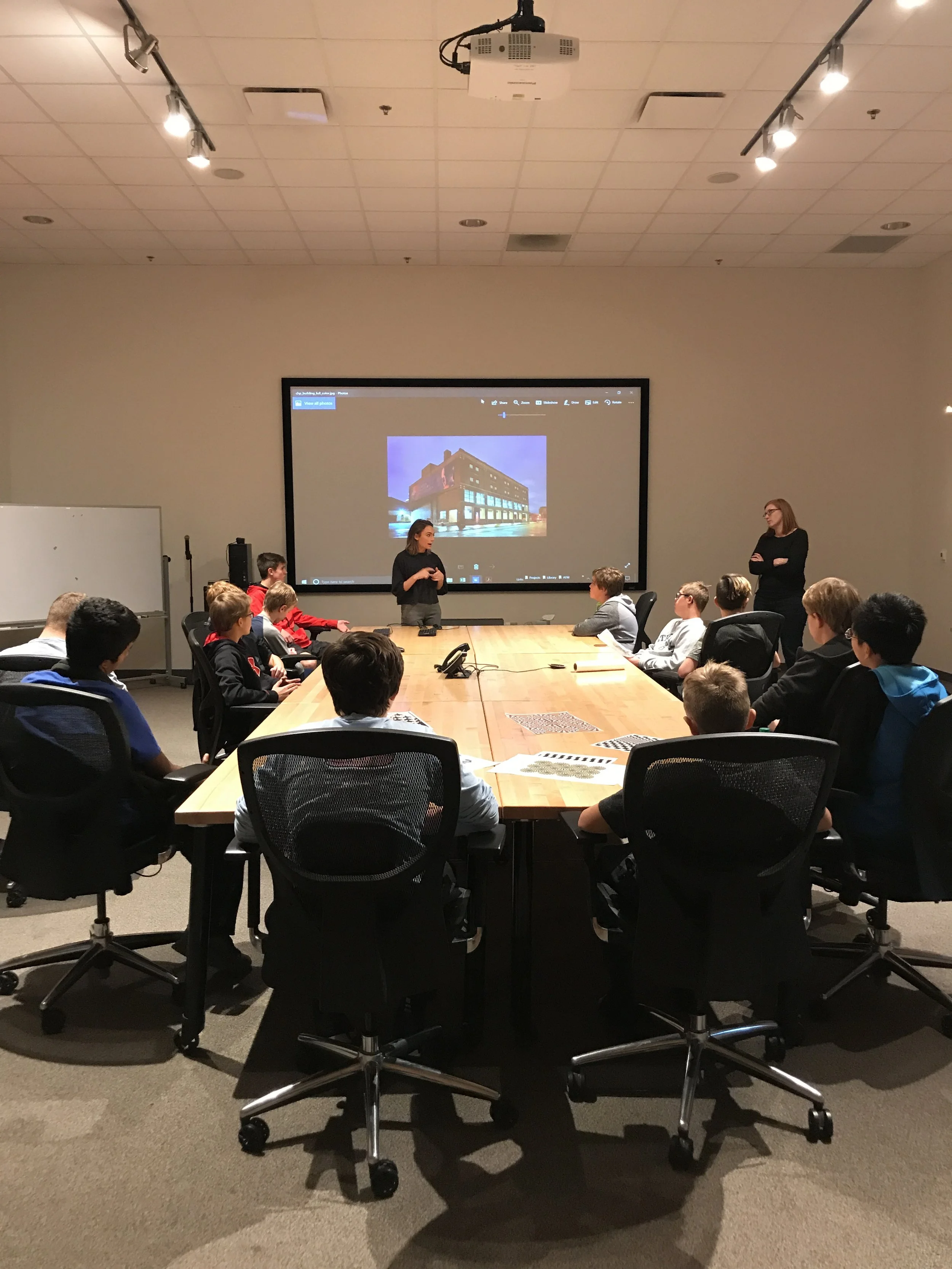
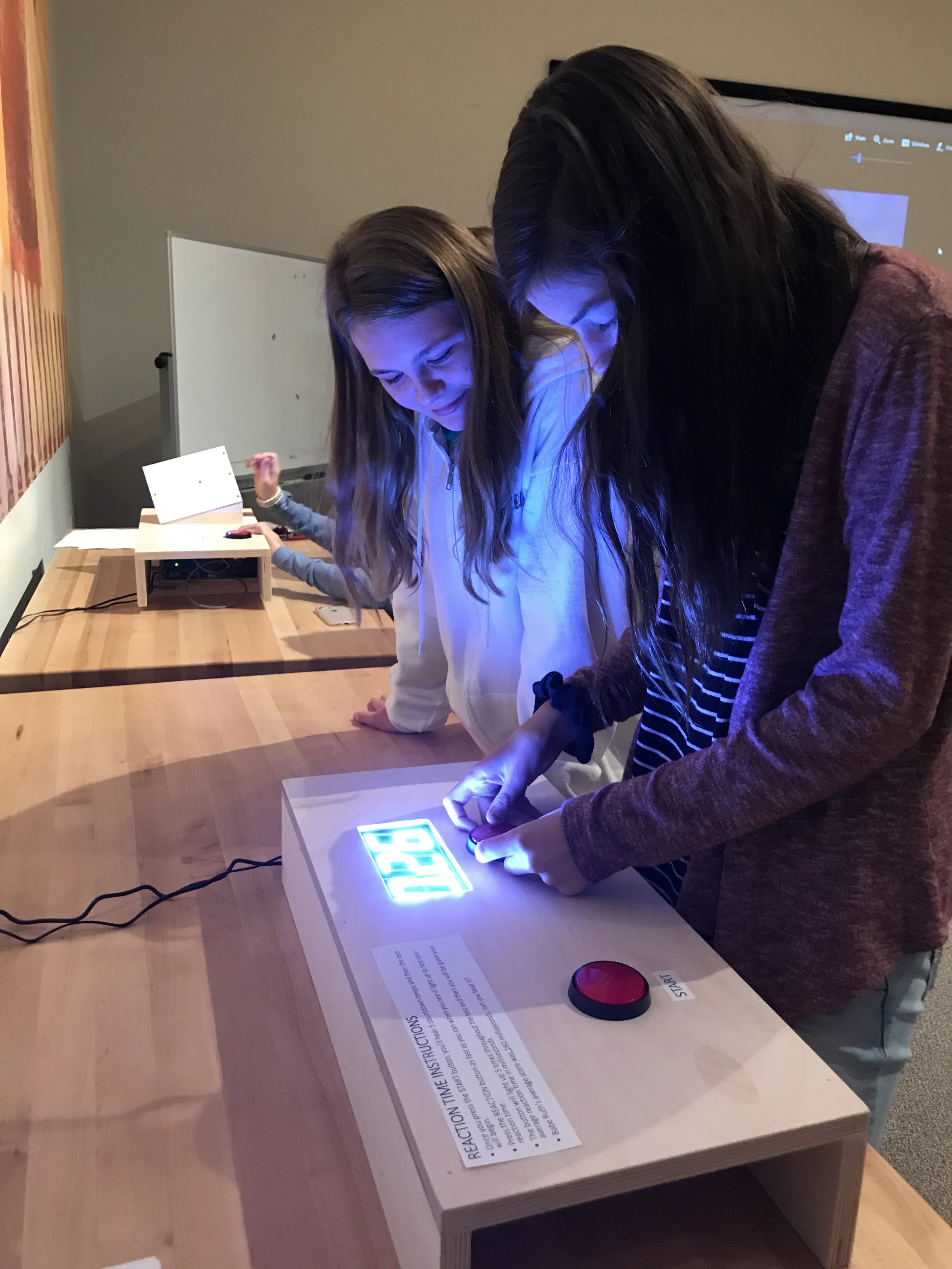
Working closely with architects and designers, our team developed physical prototypes, focus groups, and research sessions with children to evaluate and refine key aspects of the experience before fabrication. This usability testing and research helped validate interactive concepts, test scale and ergonomics, and identify potential usability or construction challenges early in the process.
Because custom installations represent a significant investment, prototyping played a critical role in reducing risk, informing design decisions, and increasing confidence that the final experience would meet both creative and functional goals.
Design
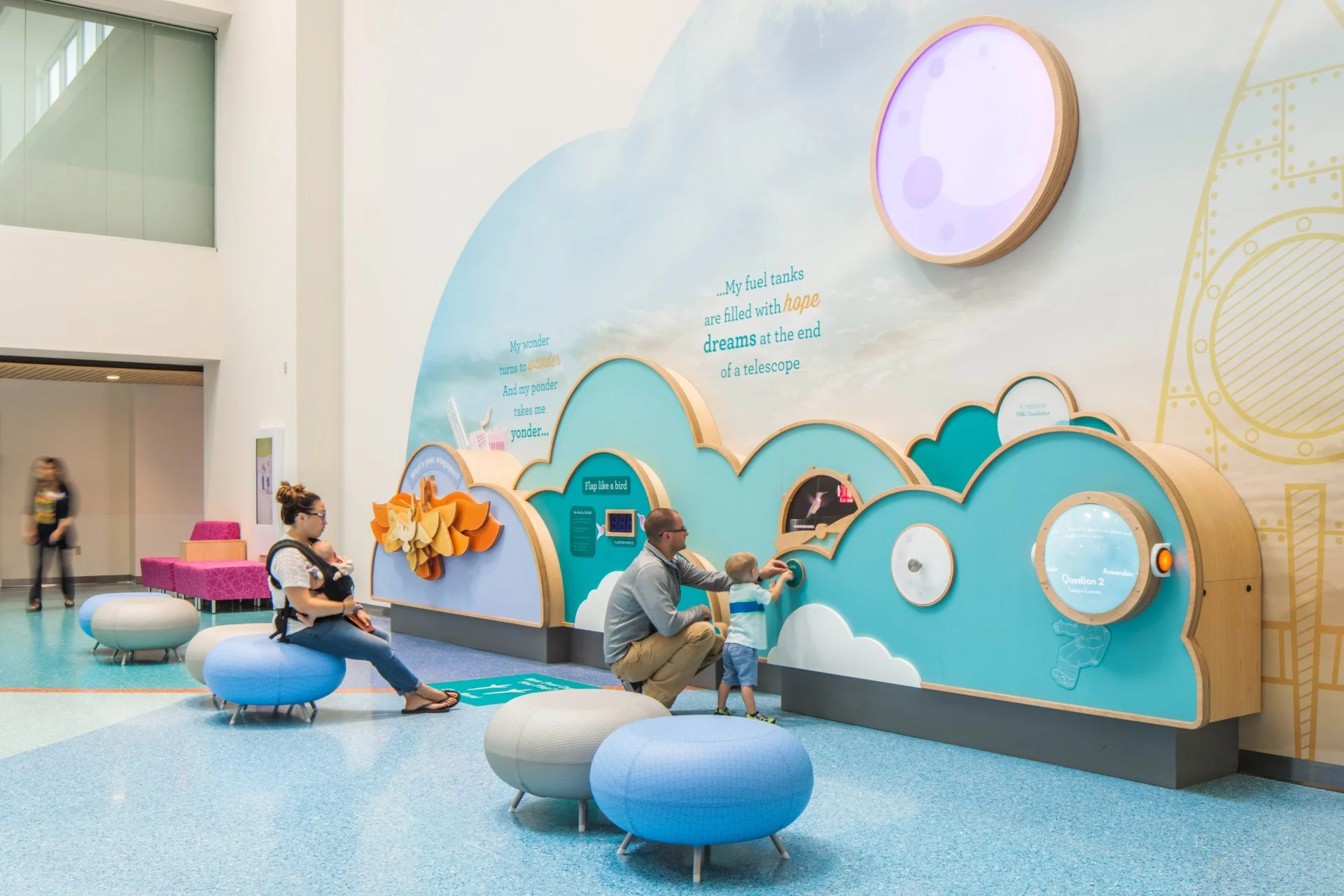
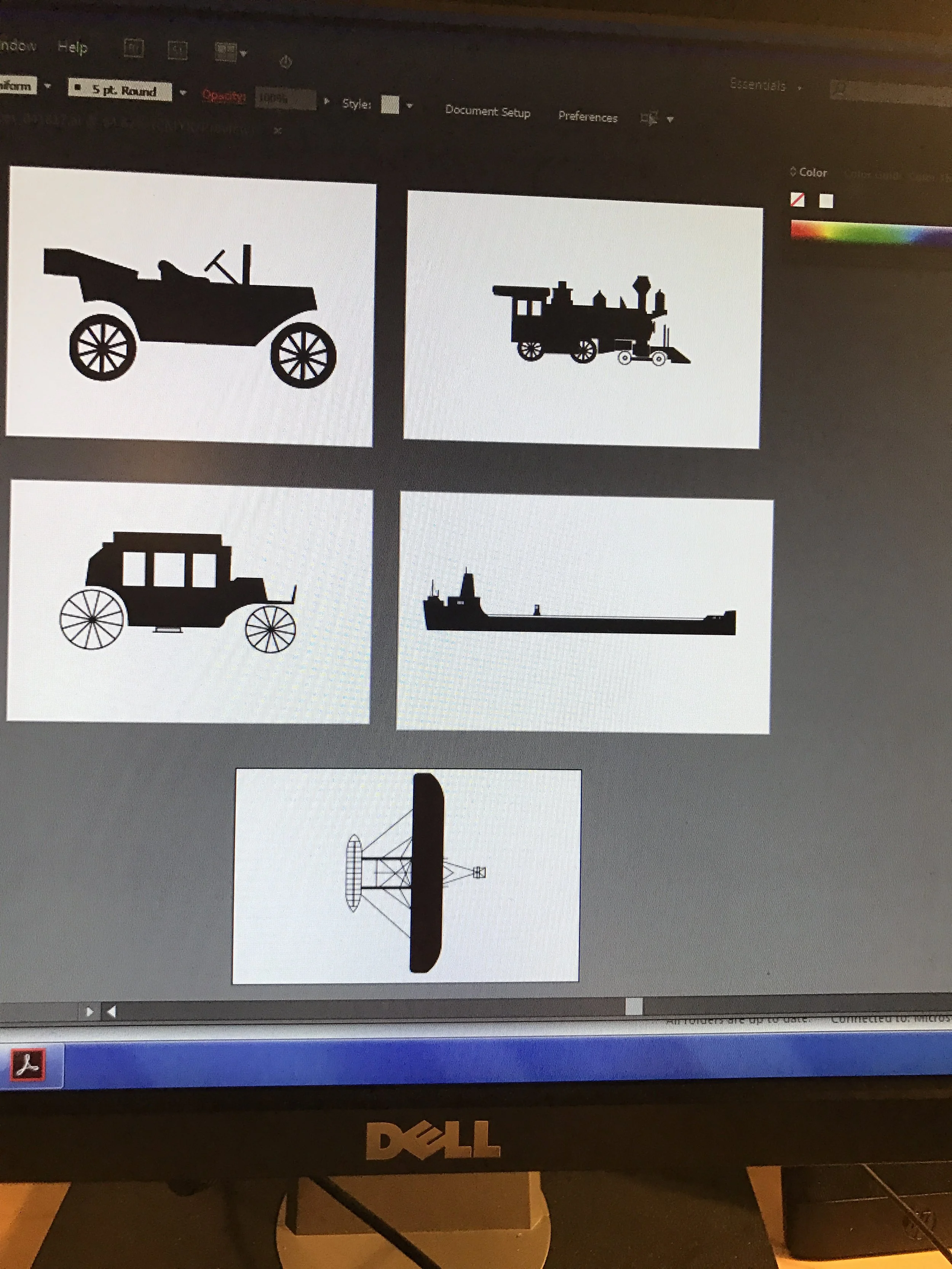
During design development, the team refined both the physical and graphic elements of the installation. This included evaluating interactive components, developing environmental graphics, refining interface elements such as controls and lighting indicators, and ensuring visual consistency across the experience.
Through iterative reviews and testing, design decisions were assessed for clarity, durability, aesthetics, and alignment with the project's goals before moving into fabrication.
Fabrication
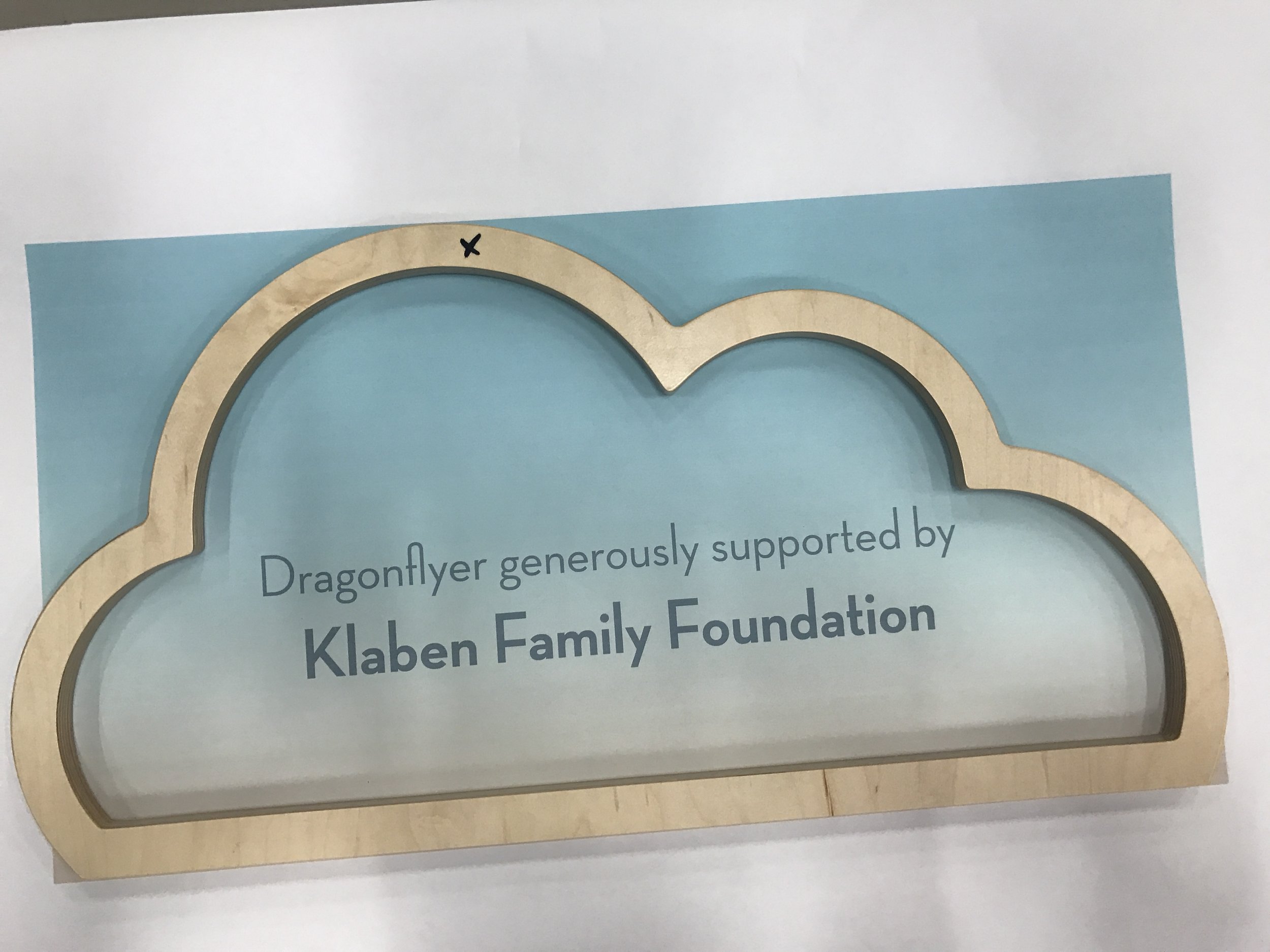
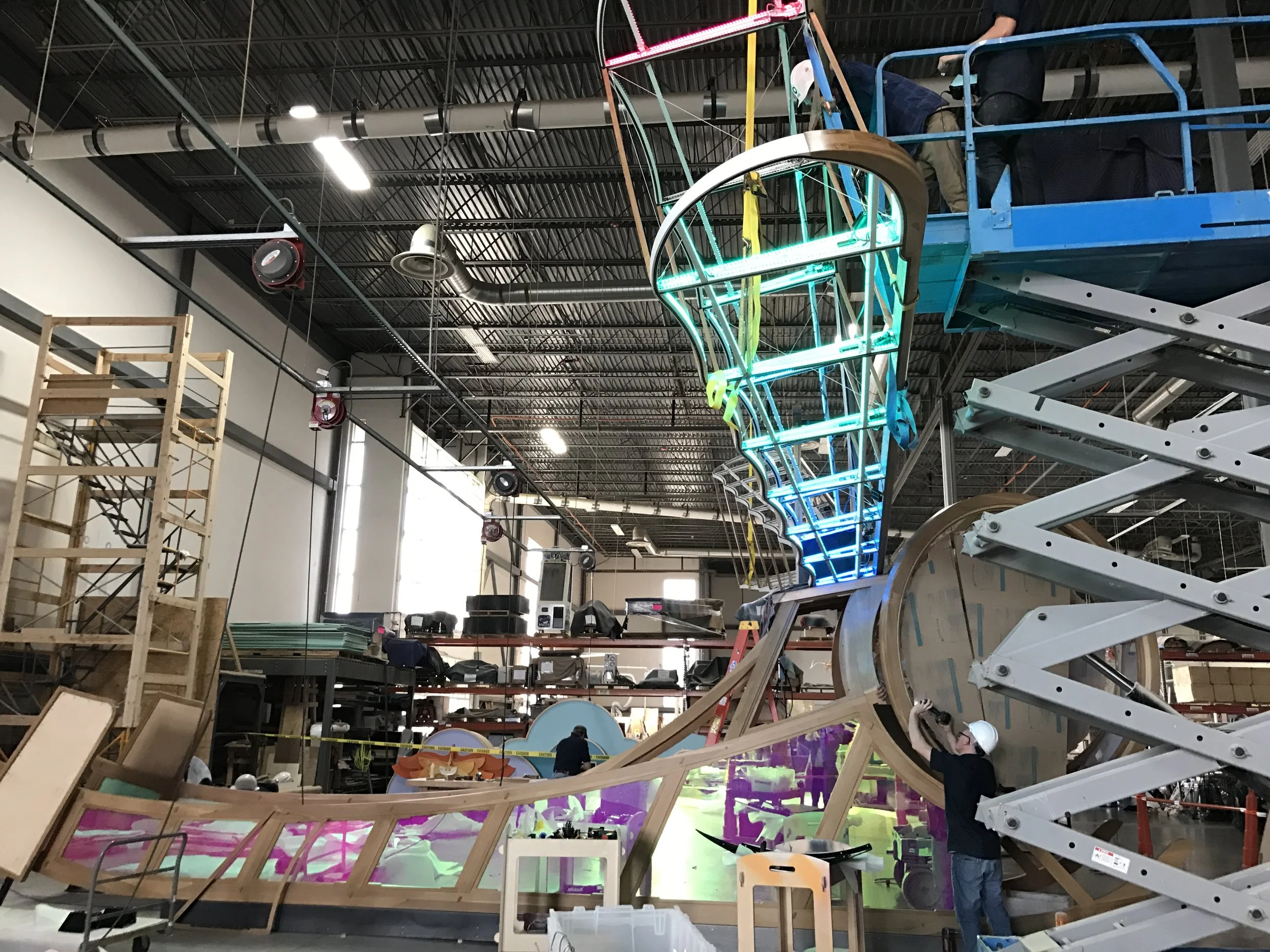
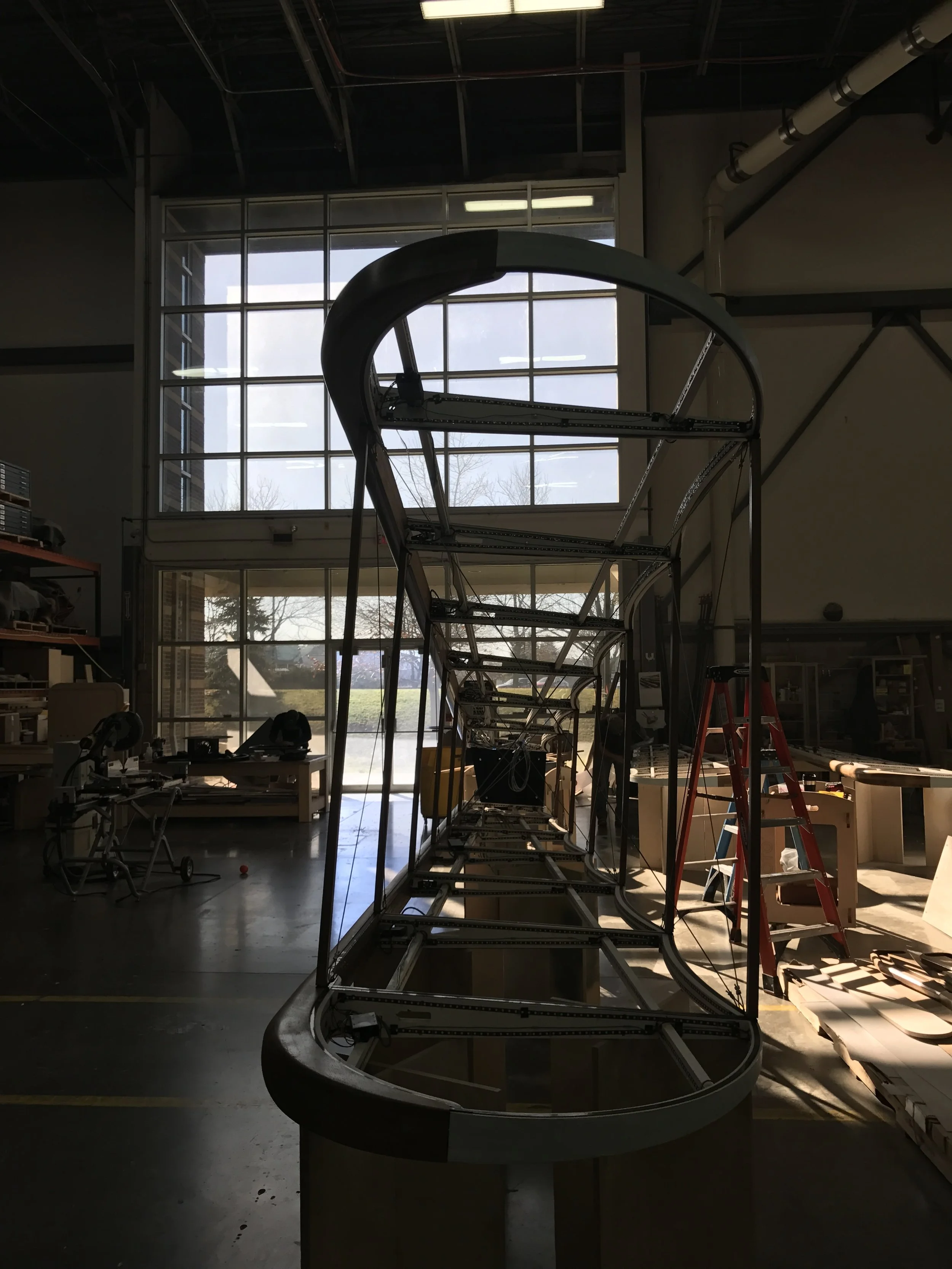
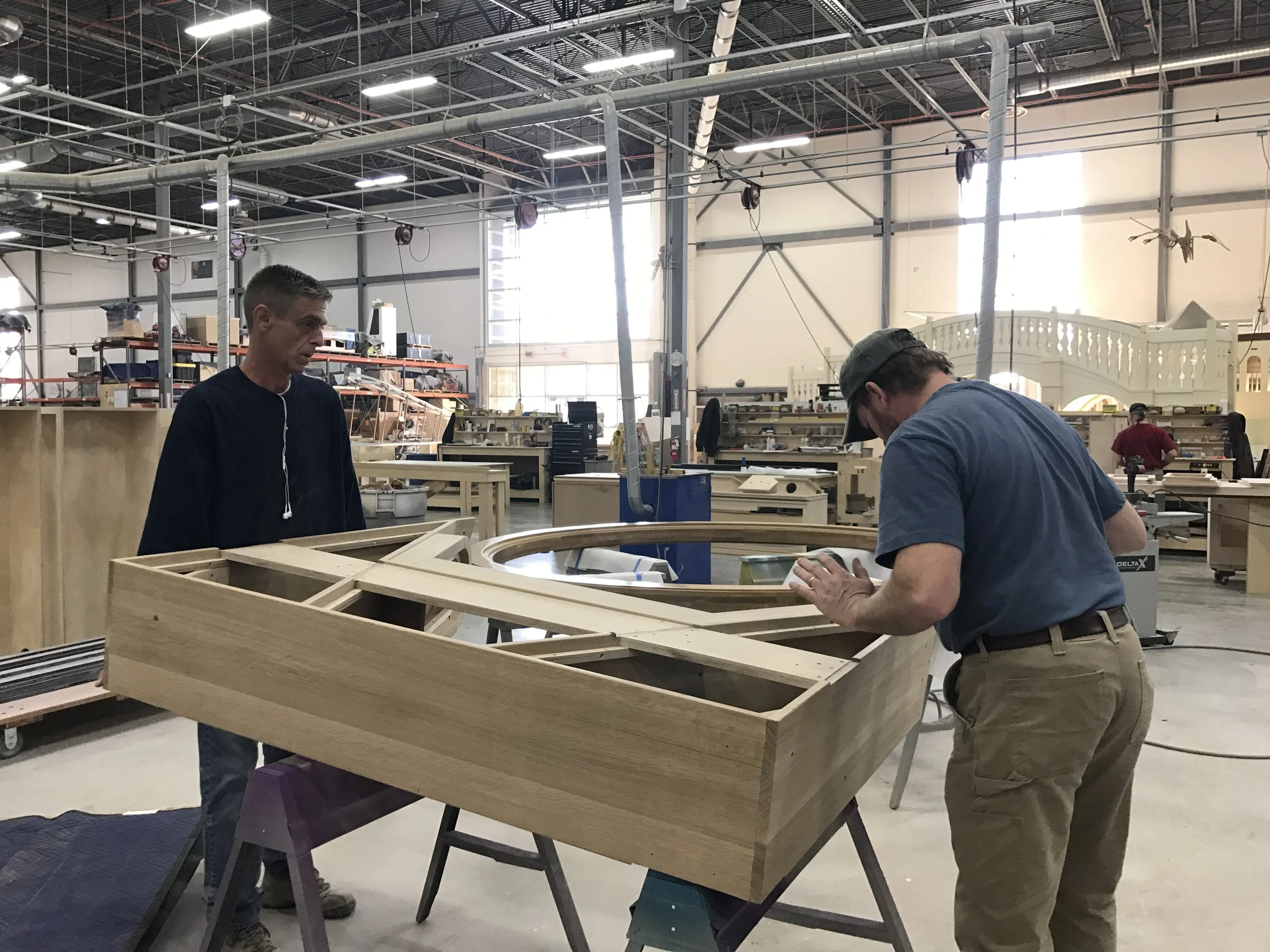
During fabrication, our in-house builders translated design concepts into physical components through close collaboration with production teams. Quality assurance reviews were conducted throughout the process to verify that materials, graphics, finishes, and interactive elements met design specifications before installation.
About the Dragonflyer:
Hand-built in solid white oak, acrylic and steel
Internally illuminated “Dragonflyer” sculpture, with visitor-activated 32-foot wingspan
Fully accessible, child-friendly, engineered for extreme durability
Companion bug-themed interactive exhibit wall
Installation
Installation brought together months of planning, design, prototyping, and fabrication. While on-site projects inevitably require adjustments and problem-solving, careful coordination across teams helped ensure a smooth installation process. Final graphics, interactive components, and environmental elements were assembled, tested, and refined on-site to prepare the experience for opening.
reflection
This project remains one of the most meaningful experiences of my career. Seeing children interact with the installation reinforced the impact thoughtful design can have on people's lives, especially in environments where comfort, distraction, and moments of joy matter most.
Working alongside architects, designers, fabricators, and installation teams also gave me an early appreciation for user-centered thinking, iterative testing, and cross-functional collaboration — principles that would later become the foundation of my career in UX and product design.