
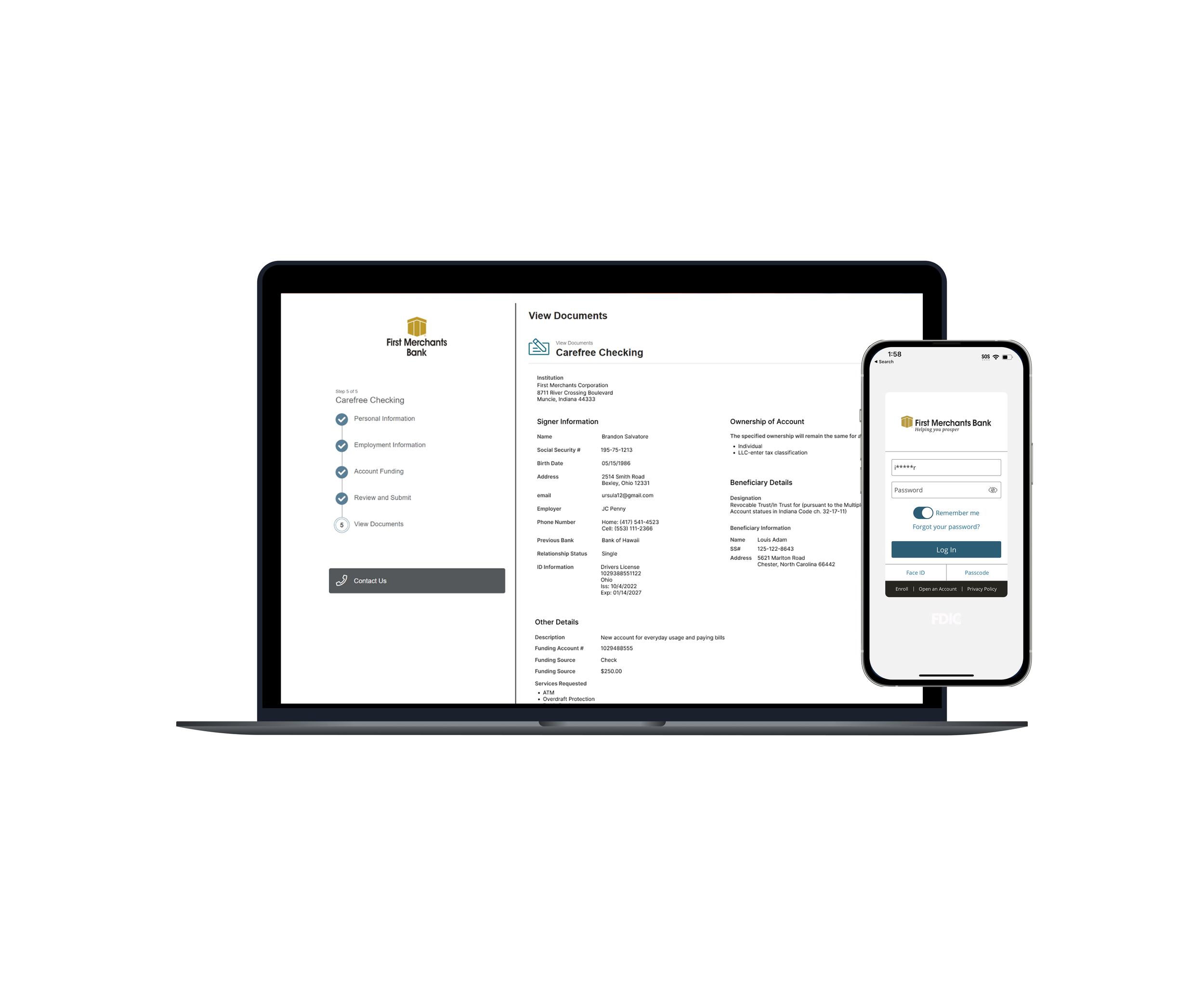
Workflows & Strategy @ First Merchant’s Bank
The Covid-19 shutdown was the catalyst for First Merchant’s Bank (FMB) to moderne its digital ecosystem. My role was to help establish UX as a strategic function while creating parity across the mobile app, web, branch, and operational teams.
Role: Senior UX Designer, AVP
Year: 2022-2025
Product Types: Internal banker tools, enterprise SaaS tools, consumer and commercial portals, multi-tenant workflows
At a Glance
3 years at First Merchants Bank
First UX hire for many initiatives
Web, mobile, and banker-facing tools
40% increase in account opening completion
Cross-functional leadership across product, engineering, compliance, marketing, and operations
THE CHALLENGE
TOOLS USED: EXPERIENCE MAPPING, COMPETITIVE ANALYSIS, AFFINITY MAPPING, WORKSHOPS
When I joined First Merchants Bank, the organization was accelerating its digital transformation, but customer experiences, banker-facing tools, and internal processes had evolved independently over time. Teams were solving problems within their own channels, making it difficult to understand how decisions impacted the broader customer journey.
As one of the organization's early UX hires, my role extended beyond designing individual products. I partnered with stakeholders across the business to establish UX practices, align teams around shared customer needs, and create a strategic foundation for future digital experiences across web, mobile, and branch operations.
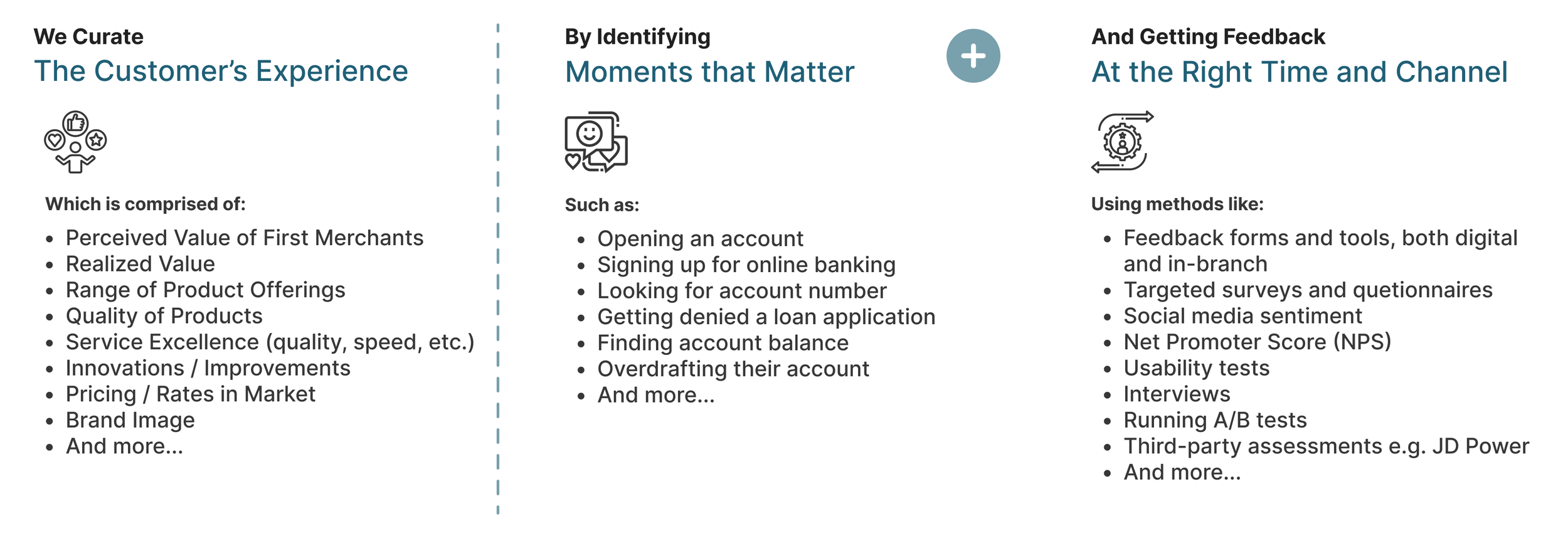
Educating stakeholders on how UX can make an impact was a key part of my role. The above diagram was intended to help articulate what we do and how we do it.
DISCOVERY & ALIGNMENT
TOOLS USED: STAKEHOKLDER INTERVIEWS, EXPERIENCE AUDITS, WORKSHOPS, JOURNEY MAPPING, AFFINITY MAPPING
Key Findings
Customer experiences varied significantly across channels
Teams lacked a shared view of the end-to-end journey
Similar problems were being solved independently across departments
UX involvement often occurred too late in the process
One of the most valuable outcomes was creating a shared view of the customer and employee experience. By bringing together teams that rarely worked closely with one another, we were able to identify common challenges, establish alignment, and create momentum around customer-centered decision making.
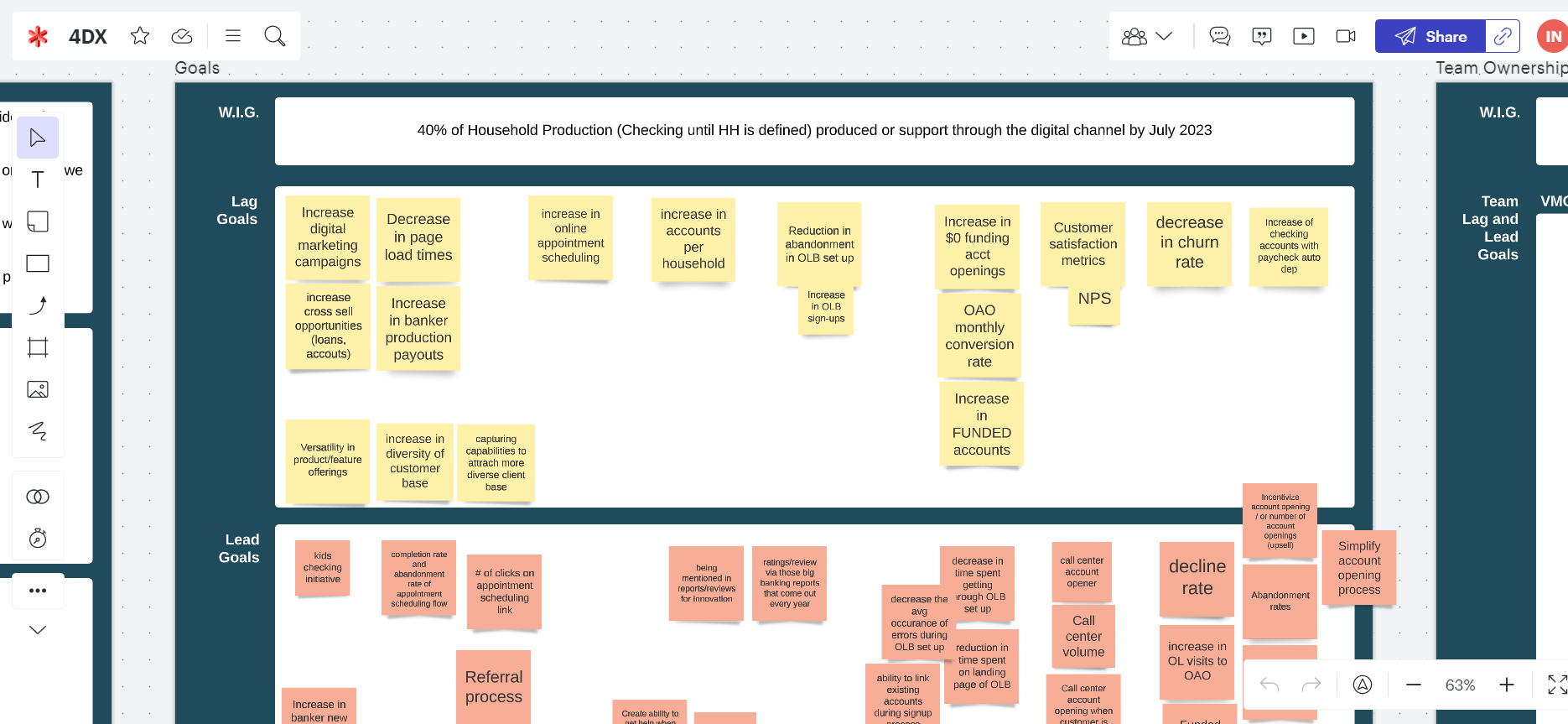
We dedicated multiple sessions to design workshops with executive leaders, aiming to not only understand their perspectives on solving our big problems but also to impart the principles of design thinking through active engagement. The success of these sessions is evident in executives actively seeking similar workshops for addressing other issues afterward.
DESIGN STRATEGY
TOOLS USED: ECOSYSTEM MAPPING, SERVICE BLUEPRINTS, PROCESS MAPS, STRATEGY WORKSHOPS, PRIORITIZATION FRAMEWORKS
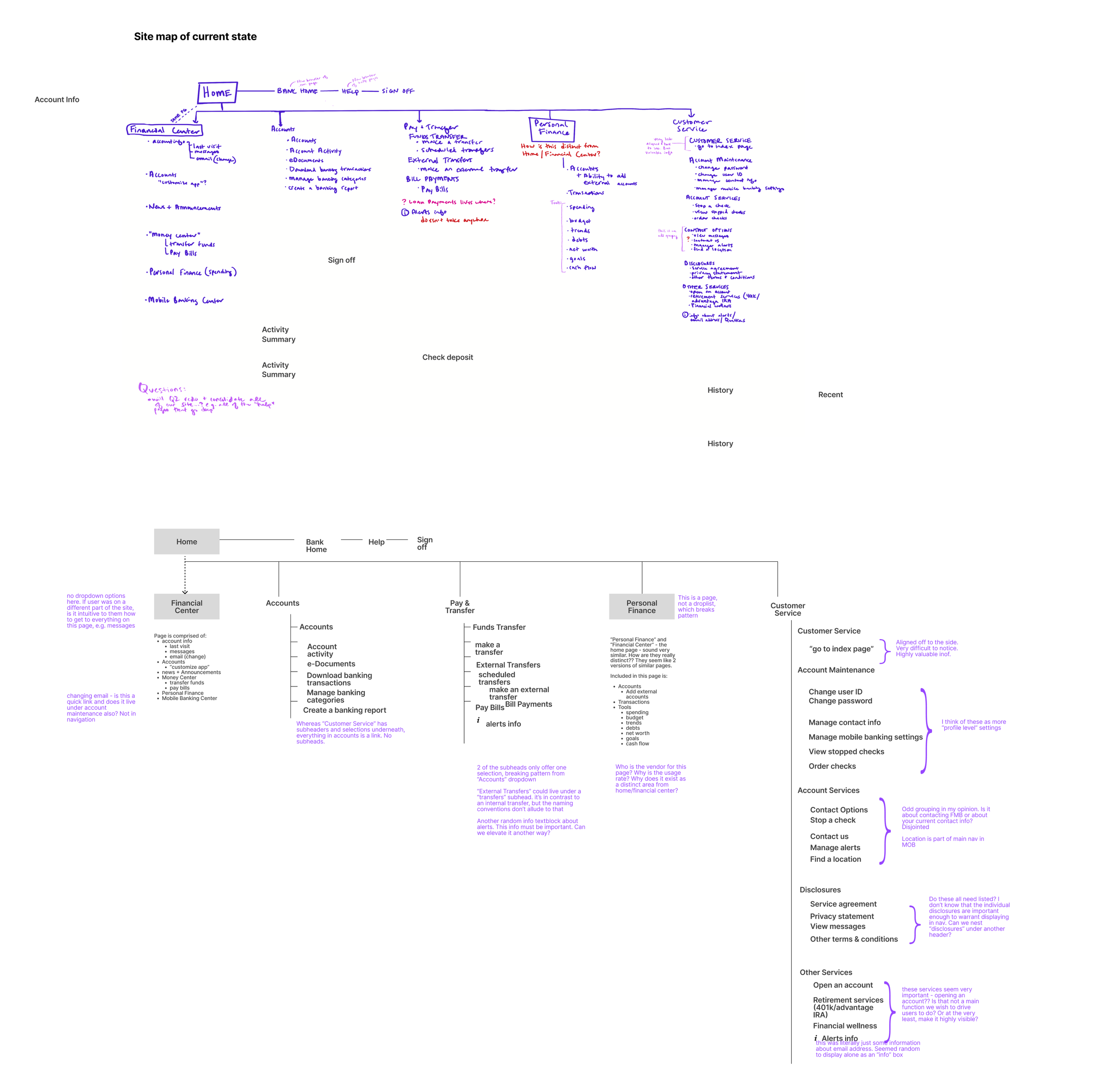
To align teams around a shared vision, I created cross-channel journey maps, service blueprints, and operating models that visualized how customer experiences connected across web, mobile, branch, and internal systems.
These artifacts helped move UX from an emerging practice toward an integrated strategic function by creating shared frameworks, stakeholder alignment, and repeatable design processes.
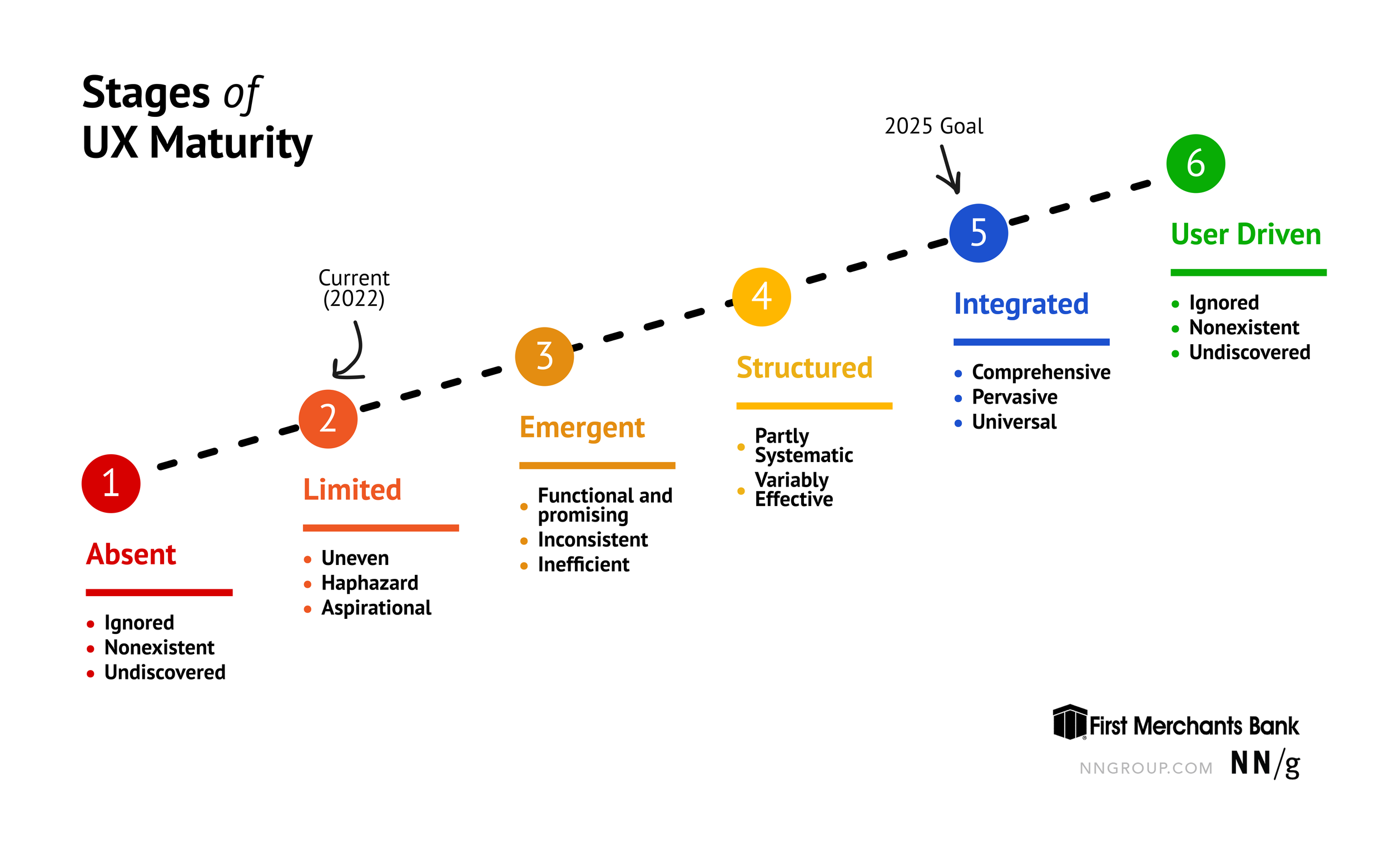
The above image is based of Nielson Norman group’s established stages, and was used for educational purposes at First Merchants Bank.
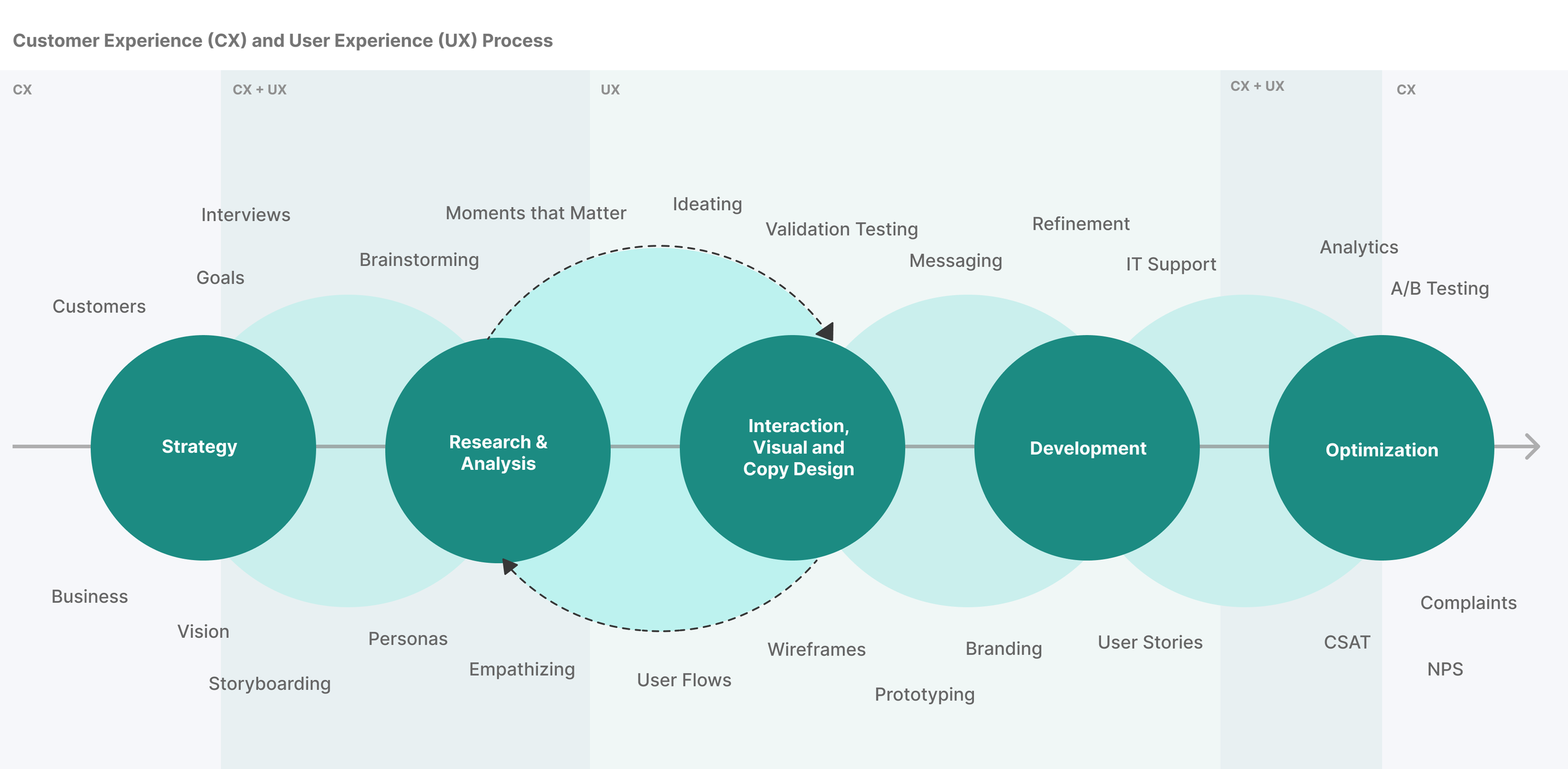
The process and activities that accompany the Customer Experience (CX) and User Experience (UX) process
BANKER-FACING TOOLS
TOOLS USED: WORKFLOW ANAYLSIS, CONTEXTUAL INQUIRY, INTERVIEWS, WIREFRAMING, PROTOTYPING, USABILITY TESTING
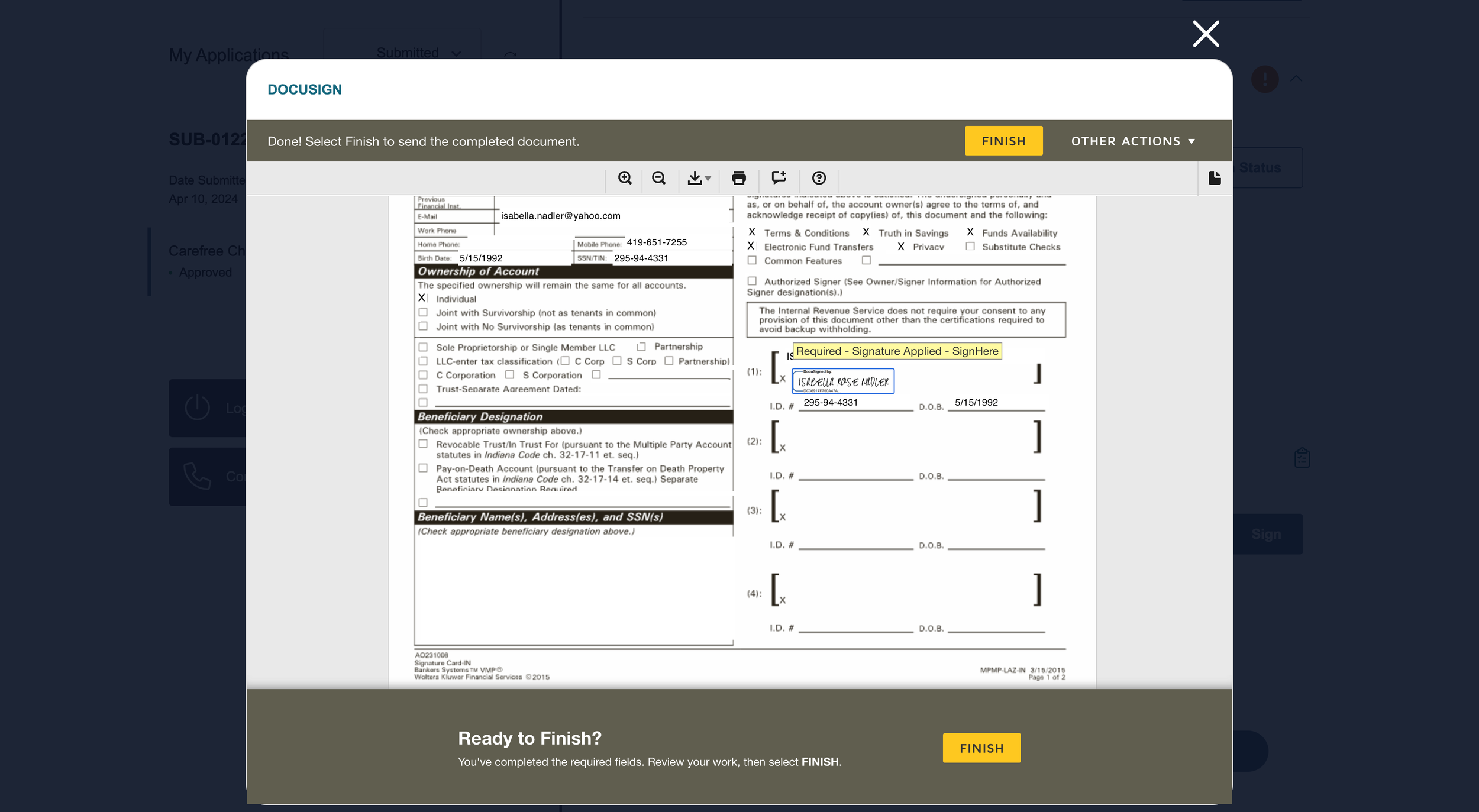
Tellers, bankers, and managers interacted with these tools every day, yet many workflows were inefficient, inconsistent, and difficult to learn. Through research, workflow analysis, and close collaboration with frontline employees, we identified opportunities to simplify complex processes and reduce friction in critical tasks.
Challenges
Legacy workflows and therefore workarounds had accumulated over many years
Processes were difficult to learn and inconsistent across teams
Multi-account structures / multi-tenant architecture
What We Did
Conducted workflow analysis with frontline employees
Mapped complex operational processes through journey mapping and service blueprinting
Identified opportunities to reduce friction, create parity, and simplify tasks
Results
Reduced complexity in critical workflows
Decreased time spent on account origination by 30%
Improved efficiency for frontline employees
Established patterns reused in future projects
Rather than treating these systems as isolated tools, we looked at how they fit within the broader service ecosystem and customer journey. Improvements to internal experiences ultimately supported better customer experiences as well.
ACCOUNT OPENING & DIGITAL EXPERIENCES
TOOLS USED: USER FLOWS, USABILITY TESTING, DESIGN SYSTEMS, CROSS-FUNCTIONAL COLLABORATION, ANNOTATED SPECS
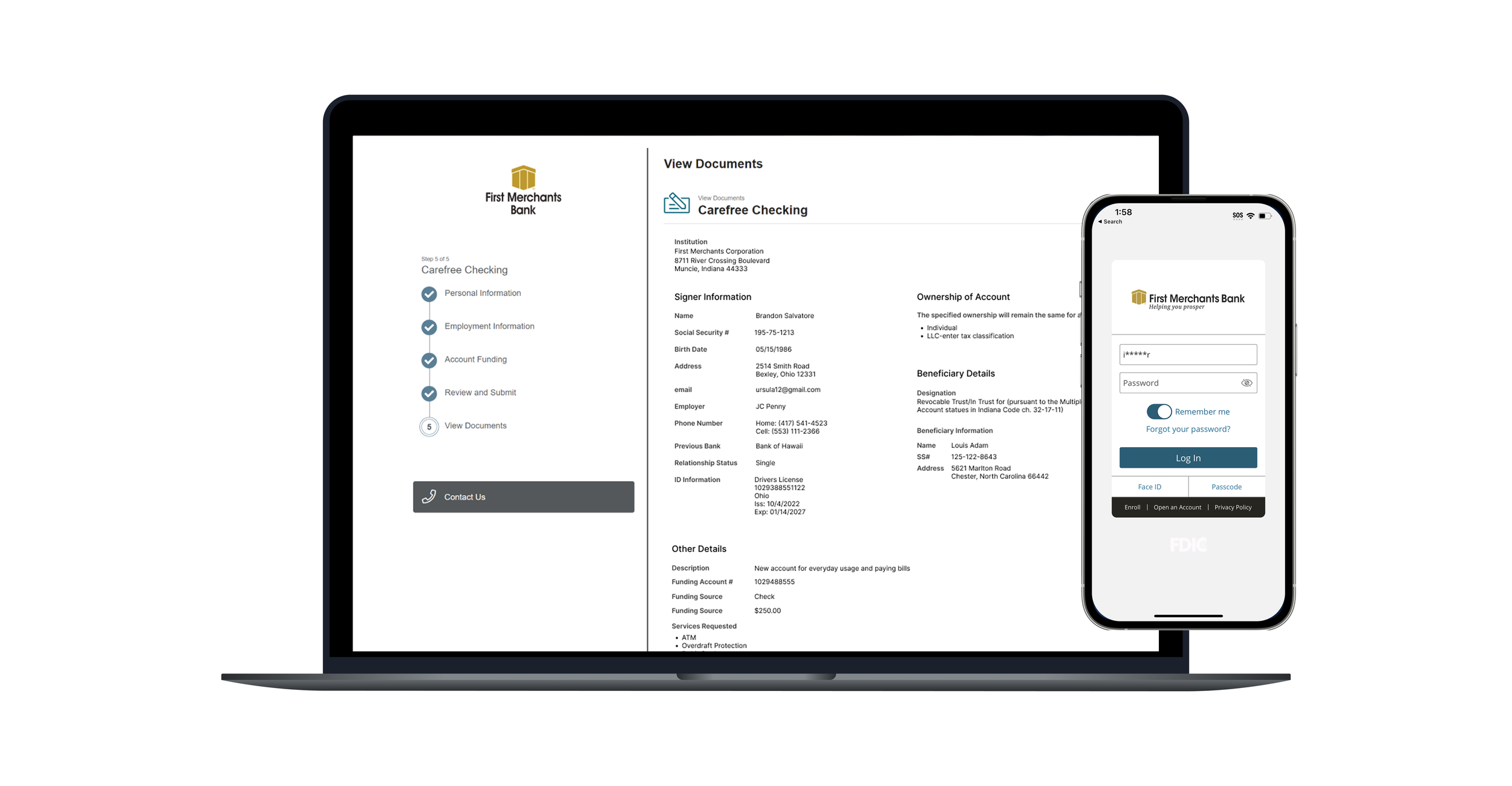
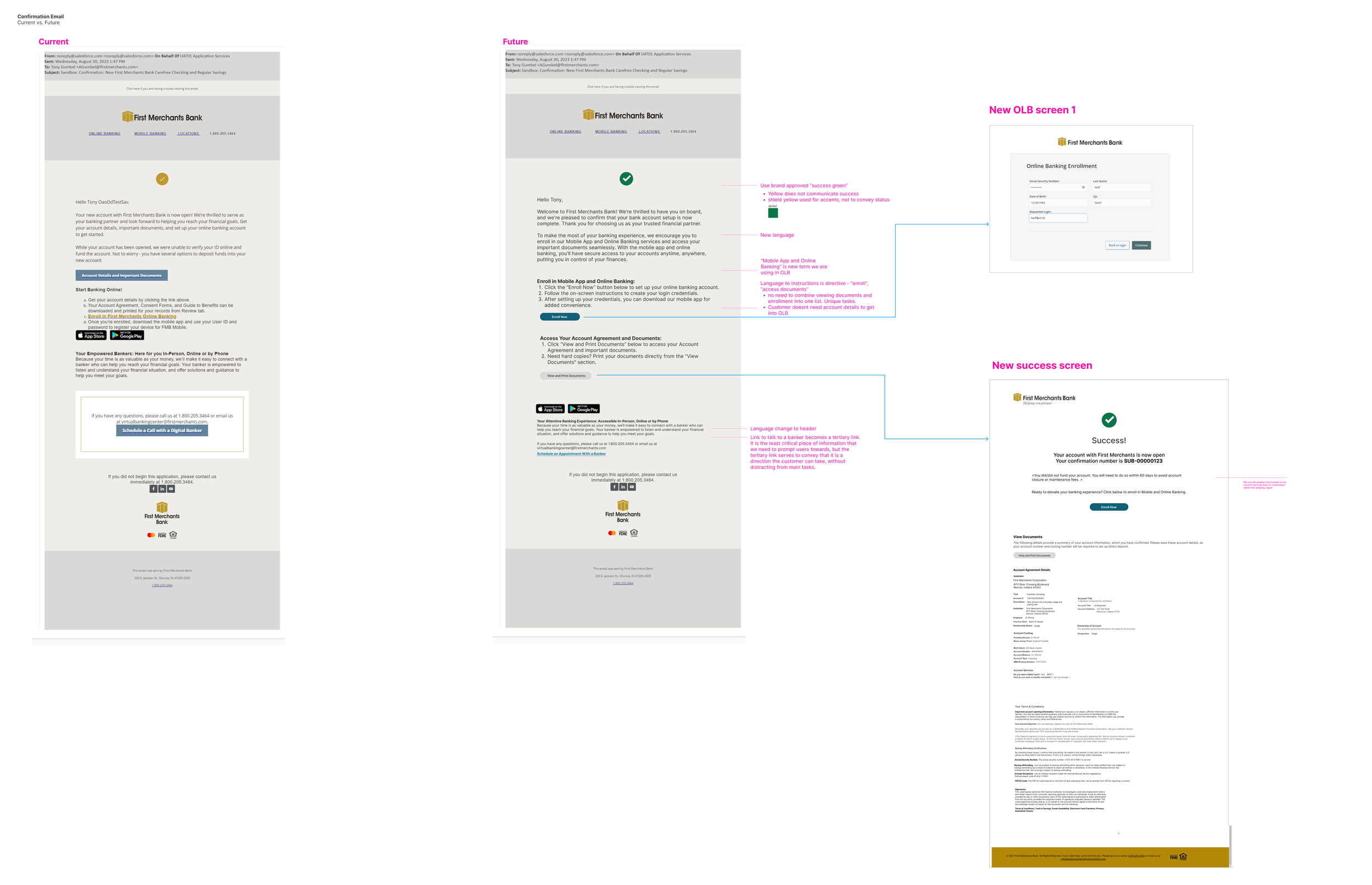
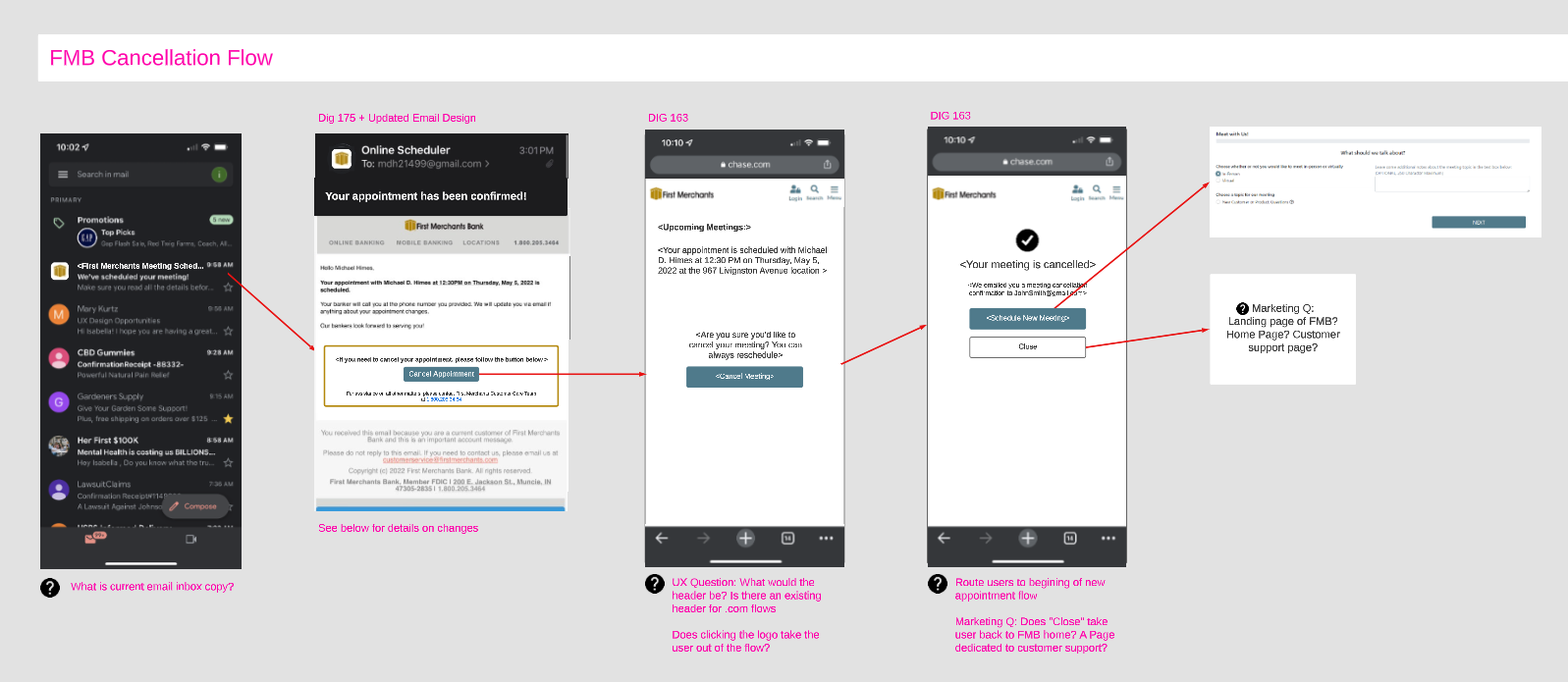
Account opening represented one of the bank's most important customer acquisition channels, yet the experience varied significantly across products and platforms. Customers often encountered inconsistent flows, duplicated steps, and unclear expectations throughout the process.
Goals
Increase completion rates
Reduce abandonment
Create consistency across channels
Establish reusable patterns for future experiences
Contributions
Redesigned onboarding flows across web and mobile
Simplified complex compliance requirements
Improved clarity and usability throughout the journey
Partnered with business, engineering, and compliance teams
Result
+40% increase in online account opening completion rates
IMPACT
Helped establish UX as a strategic function within the organization
Created cross-channel experience frameworks used by multiple teams
Improved collaboration between product, operations, marketing, and branch stakeholders
Redesigned customer-facing and internal banking experiences
Increased online account opening completion rates by 40%
Established reusable patterns and processes that continued beyond the project
The result of my time was not a single product launch, but a stronger foundation for future digital experiences across the bank.